Capsaicin Molecule in 3D: C₁₈H₂₇NO₃ Structure and Facts
Capsaicin is the molecule that makes chilli peppers taste hot. It triggers the same nerve sensors that detect heat, which is why spicy food feels like it burns. In Molecule Studio you can spin the capsaicin molecule, zoom in on each atom and measure its bonds.
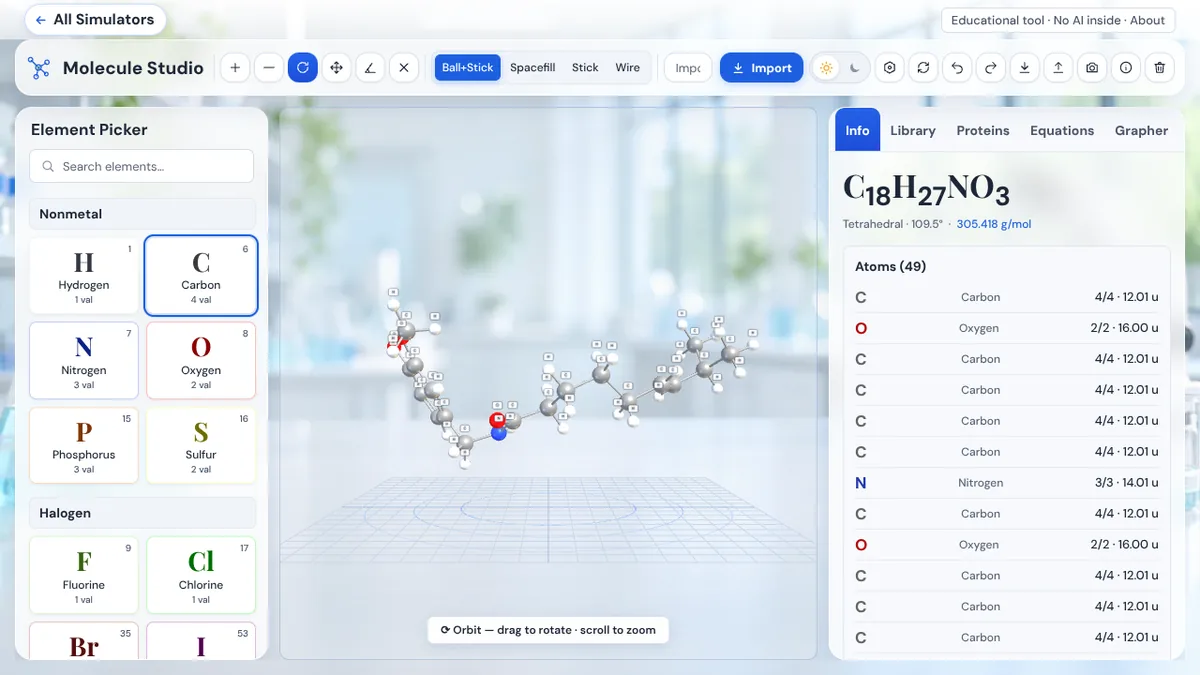 Explore in 3D
Capsaicin quick facts
| Chemical formula | C₁₈H₂₇NO₃ |
|---|---|
| Molar mass | 305.42 g/mol |
| Atoms in one molecule | 49 |
| Shape | Ring with a long tail |
| Group | Food |
What is capsaicin used for?
- Giving heat to chillies and spicy food
- Pain relief creams
- Pepper spray
Interesting facts about capsaicin
- It switches on the nerve sensors that detect heat.
- Birds do not feel its heat, so they spread chilli seeds.
- It does not dissolve in water, so water does not cool the burn well.
- The Scoville scale measures how much capsaicin a pepper has.
What you can do in 3D
Turn the molecule to see it from every side, switch between ball and stick, space filling and wire views, and tap atoms to measure bond lengths and angles.
More food molecules
Capsaicin questions
What is the formula of capsaicin?
C18H27NO3.
Why does capsaicin feel hot?
It activates the heat-sensing receptors on nerves, tricking the brain into feeling heat.
Why doesn't water stop chilli burn?
Capsaicin does not dissolve in water. Milk works better because it contains fats and proteins that help.
What is capsaicin used for?
Spicy food, pain relief creams and pepper spray.
Molecule Studio is made by Julian Neagu, a solo founder in London, as part of VisionVix Simulators. It is free to use in the browser on desktop and phone, with no sign-up. In the tool, molecules load from the built-in library or from PubChem.