Exothermic vs Endothermic Reactions: Explained with 3D Experiments
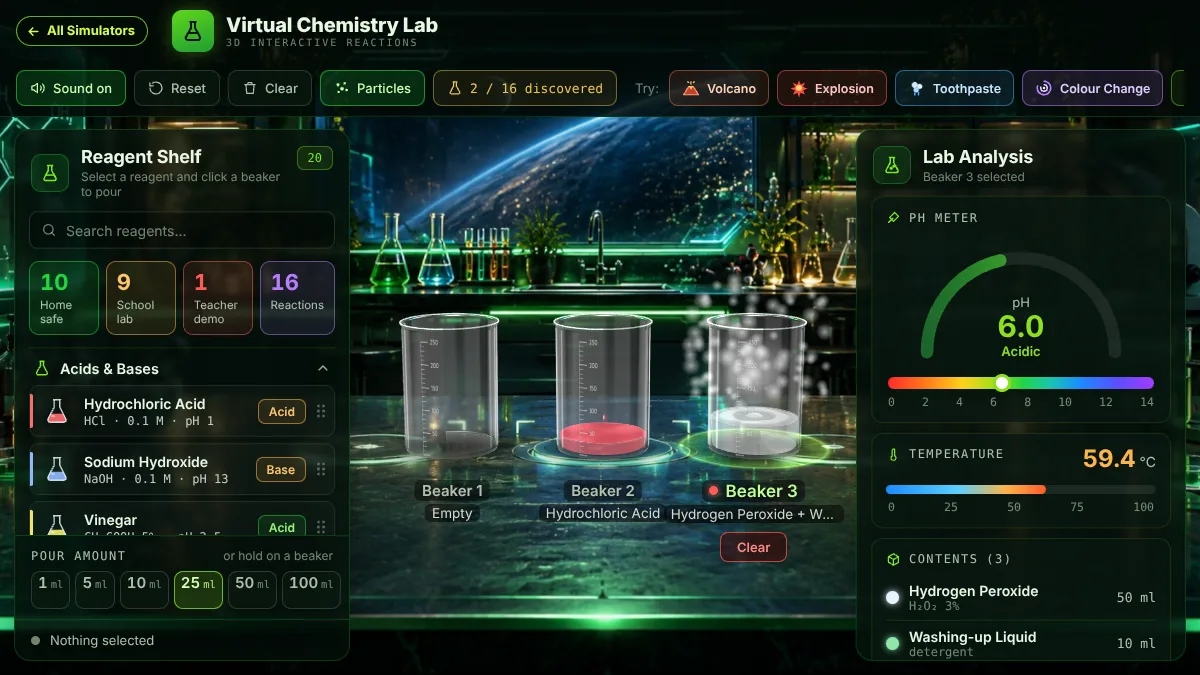
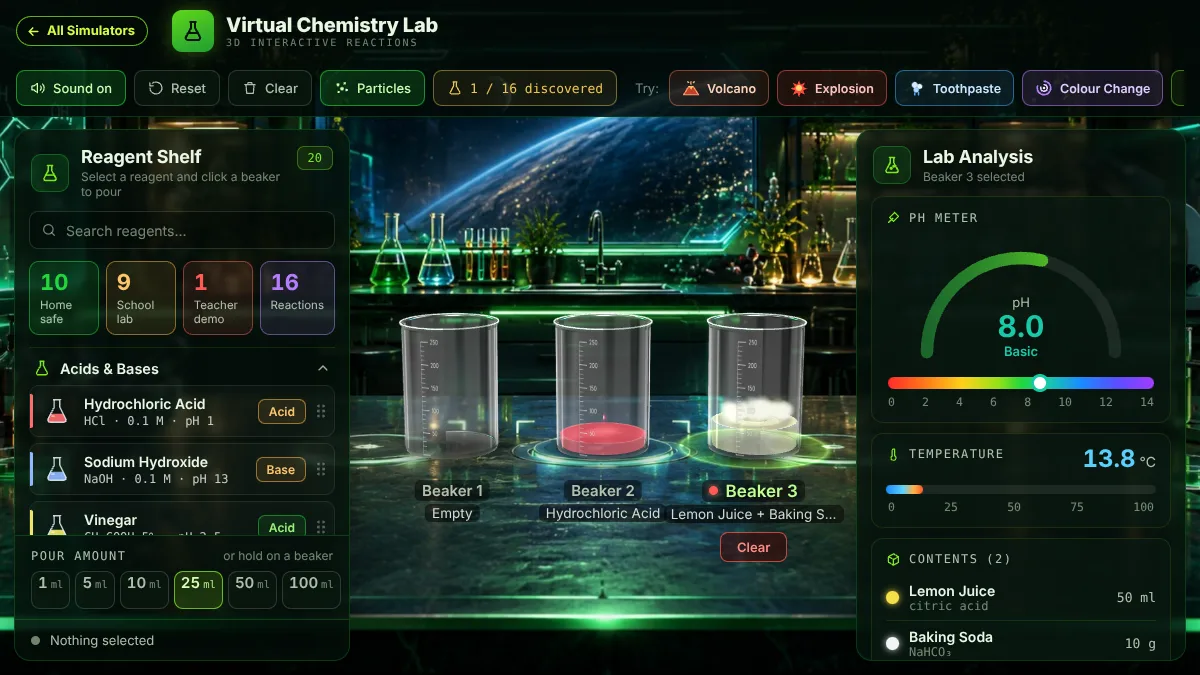
In an exothermic reaction, energy flows out to the surroundings, so the beaker gets warmer. In an endothermic reaction, energy flows in from the surroundings, so the beaker gets colder. You can watch both happen in the 3D Chemistry Lab and see the thermometer move.
Exothermic vs endothermic at a glance
| Exothermic | Endothermic | |
|---|---|---|
| Energy | Given out to the surroundings | Taken in from the surroundings |
| Temperature | Goes up | Goes down |
| Energy change, ΔH | Negative | Positive |
| Bonds | More energy released making new bonds than used breaking old ones | More energy used breaking bonds than released making new ones |
| Energy diagram | Products end lower than reactants | Products end higher than reactants |
| Everyday examples | Burning, hand warmers, respiration, neutralisation | Instant cold packs, photosynthesis, baking soda with acid |
| In the 3D lab | Elephant toothpaste, sodium in water, acid with alkali | Lemon fizz, vinegar and baking soda |
Where the energy comes from
Every reaction breaks some bonds and makes new ones. Breaking a bond always takes energy in, and making a bond always gives energy out. If the new bonds release more energy than the old ones took to break, the extra flows out as heat, and the reaction is exothermic. If breaking the old bonds took more, the reaction pulls the difference in from its surroundings, and it is endothermic.
Try it in the lab
In the 3D Chemistry Lab, run the Toothpaste demo and watch the temperature climb as hydrogen peroxide breaks down into water and oxygen. Then run Lemon Fizz: citric acid and baking soda fizz out carbon dioxide and the temperature drops below where it started.
Quick facts
- Both kinds need a little energy to get started, called the activation energy.
- A hand warmer gets hot because iron powder reacts with oxygen, an exothermic reaction.
- An instant cold pack gets cold because a salt such as ammonium nitrate dissolving in water takes in heat.
- Photosynthesis is endothermic: plants take in energy from sunlight to build sugar.
- Respiration is exothermic: your cells release energy from sugar, which helps keep you warm.
Exothermic vs endothermic questions
What is the difference between exothermic and endothermic?
An exothermic reaction gives out energy, usually as heat, so its surroundings warm up. An endothermic reaction takes in energy, so its surroundings cool down.
Is burning exothermic or endothermic?
Exothermic. Burning releases a lot of energy as heat and light.
Is photosynthesis exothermic or endothermic?
Endothermic. Plants take in energy from sunlight to turn carbon dioxide and water into glucose.
Is baking soda and vinegar exothermic or endothermic?
Endothermic. The mixture fizzes and gets slightly colder.
Is ΔH negative for exothermic reactions?
Yes. ΔH is negative for exothermic reactions because the products hold less energy than the reactants. It is positive for endothermic reactions.
More face-offs: see all 3D comparisons.
The 3D Chemistry Lab is made by Julian Neagu, a solo founder in London, as part of VisionVix Simulators. It is free to use in the browser on desktop and phone, with no sign-up.