Grasshopper vs Locust: What Is the Difference?
Here is the surprise: a locust is a grasshopper. Locusts are a few kinds of short-horned grasshopper that can change completely when they get crowded. They switch colour, grow stronger wings for long flights and start to march and fly together in huge swarms. All locusts are grasshoppers, but most grasshoppers never become locusts.
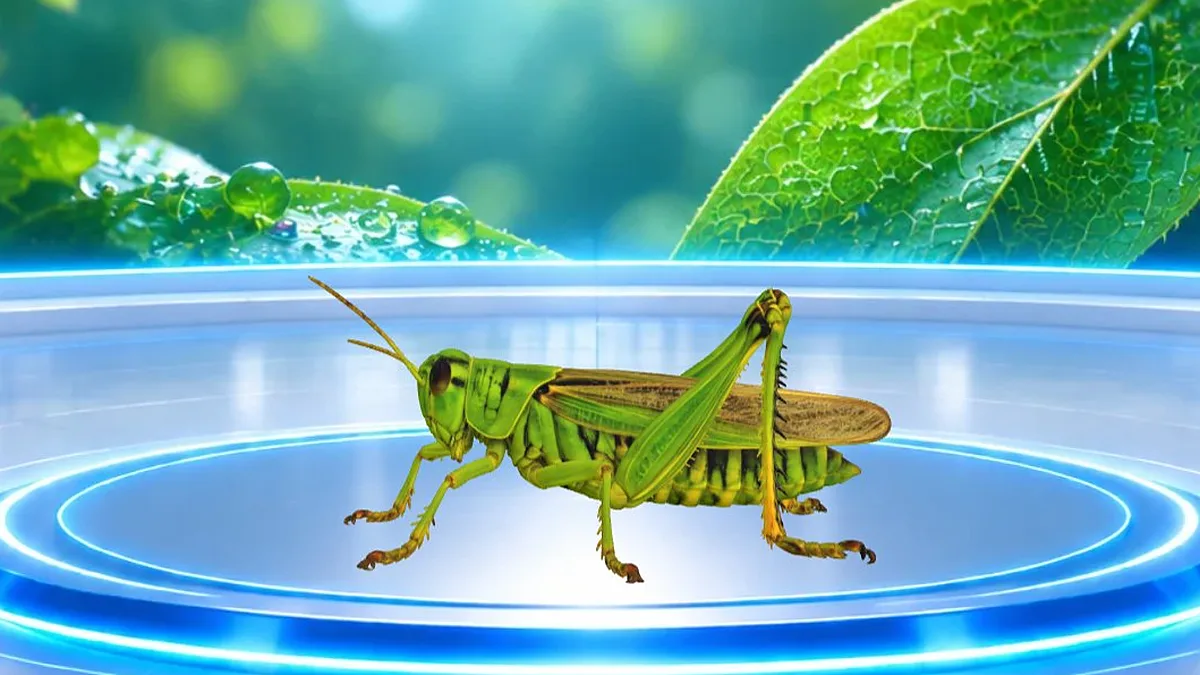
Grasshopper vs locust: true size
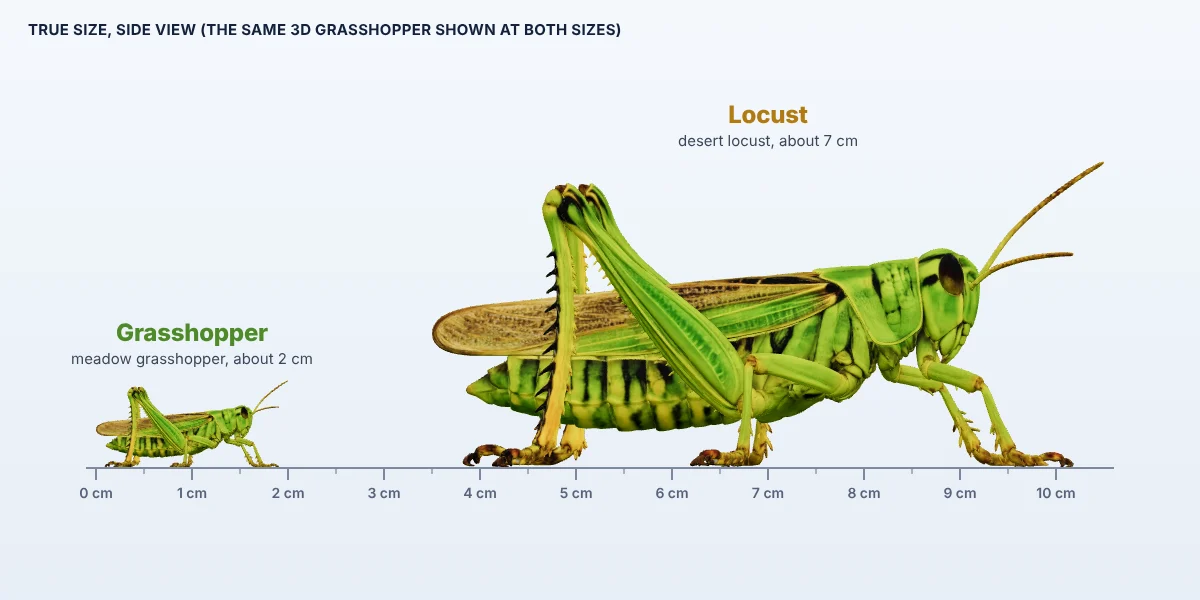
Grasshopper vs locust at a glance
| Grasshopper | Locust | |
|---|---|---|
| Size | A meadow grasshopper is about 1.5 to 2 cm long | An adult desert locust is about 6 to 8 cm long |
| What it is | Any of thousands of jumping insects with short antennae | A few kinds of grasshopper that can change when crowded |
| Lives | Alone, in one area | Alone at first, then in bands and swarms |
| Colour | Usually green or brown to hide in grass | Crowded locusts often turn bold yellow and black |
| Moves | Hops, flies short distances | Marches in bands as young, flies far as an adult swarm |
| Wings | For short flights | Grow longer for long journeys |
| Damage to crops | Usually small | Swarms can strip whole fields in hours |
| Famous example | The meadow grasshopper | The desert locust of Africa and Asia |
How a grasshopper becomes a locust
When rain brings lots of plants and the young grasshoppers breed fast, they end up packed tightly together. Being bumped on the back legs again and again raises a brain chemical called serotonin. Within hours they stop avoiding each other and start to crowd together. Over the next generations they change colour, their wings grow longer and their muscles get stronger. Scientists call these the lonely phase and the crowded phase.
Why swarms are so feared
A single desert locust eats about its own weight in plants every day. A swarm can hold tens of millions of locusts in one square kilometre and can travel more than a hundred kilometres in a day on the wind. Locust swarms have been recorded since ancient times and still threaten food for millions of people today.
Same body, different life
- Both have big back legs packed with muscle, which can throw them many times their own body length.
- Both have short, thick antennae. Crickets and katydids have long, thin ones, which is an easy way to tell them apart.
- Both have hearing organs on the sides of the abdomen, not on the head.
- Both breathe through tiny holes along the body that lead to air tubes inside.
- If crowding stops, locusts slowly change back to the lonely phase over a few generations.
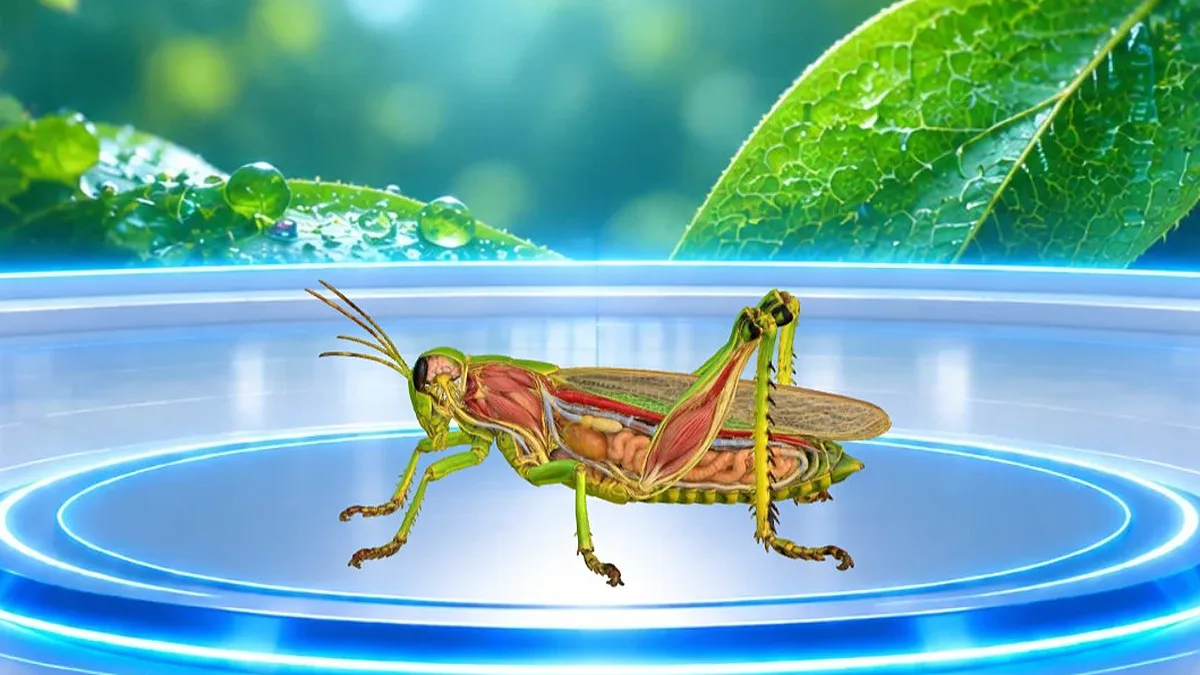
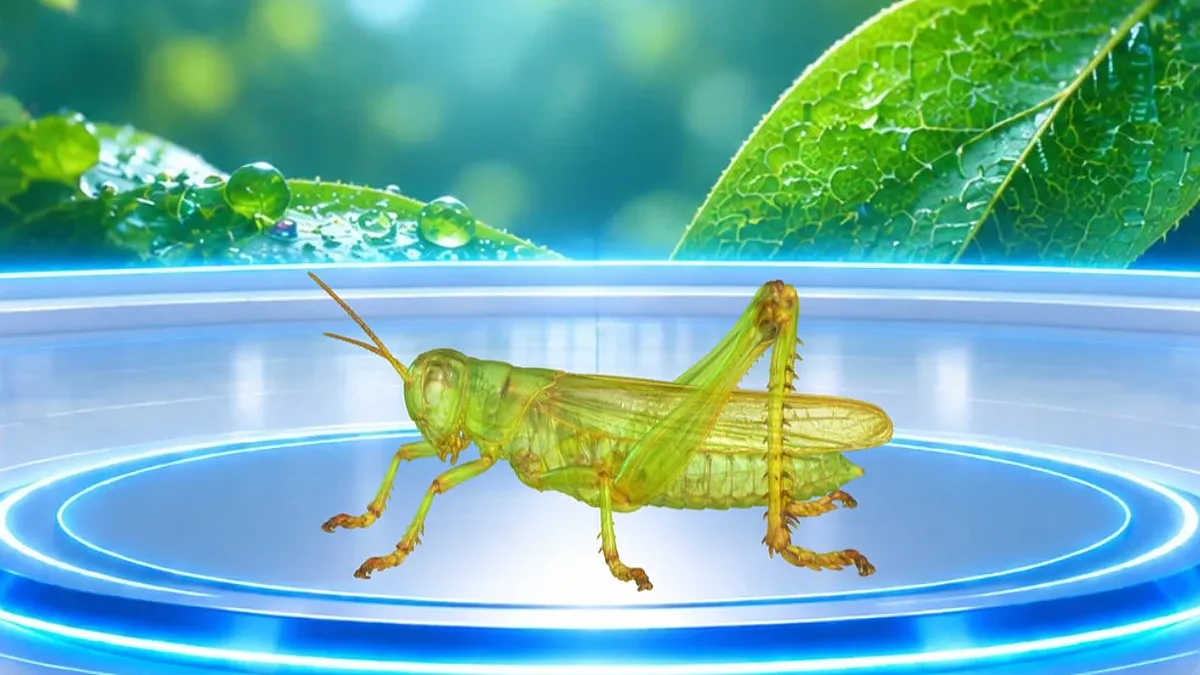
Look inside
Grasshopper vs locust questions
Is a locust a grasshopper?
Yes. Locusts are a small number of grasshopper species that can switch into a crowded swarming phase. Every locust is a grasshopper, but most grasshoppers never swarm.
How can you tell a locust from a grasshopper?
In the lonely phase you often cannot, as a locust looks like any other grasshopper. In the crowded phase, locusts usually change colour, often to yellow and black, have longer wings and move together in large groups.
What makes a grasshopper turn into a locust?
Crowding. When the insects are packed together and keep touching each other’s back legs, a rise in serotonin in the nervous system starts the switch to swarming behaviour.
Do grasshoppers and locusts bite people?
They chew plants with strong jaws and may give a small nip if held, but they are not dangerous to people. The harm from locusts comes from the crops they eat.
What is the difference between a grasshopper and a cricket?
Grasshoppers, including locusts, have short antennae and are mostly active by day. Crickets have long, thin antennae and are usually active at night.
More face-offs: see all 3D comparisons.
The 3D Bug Anatomy simulator is made by Julian Neagu, a solo founder in London, as part of VisionVix Simulators. It is free to use in the browser on desktop and phone, with no sign-up.