Left Brain vs Right Brain: Myth vs Science
Your brain has two halves, joined by a thick bridge of nerve fibres. Each half does lead on some jobs, so the left and right brain are not identical. But the popular idea that people are either logical "left-brained" types or creative "right-brained" types is a myth. Brain scans show we all use both halves all the time.
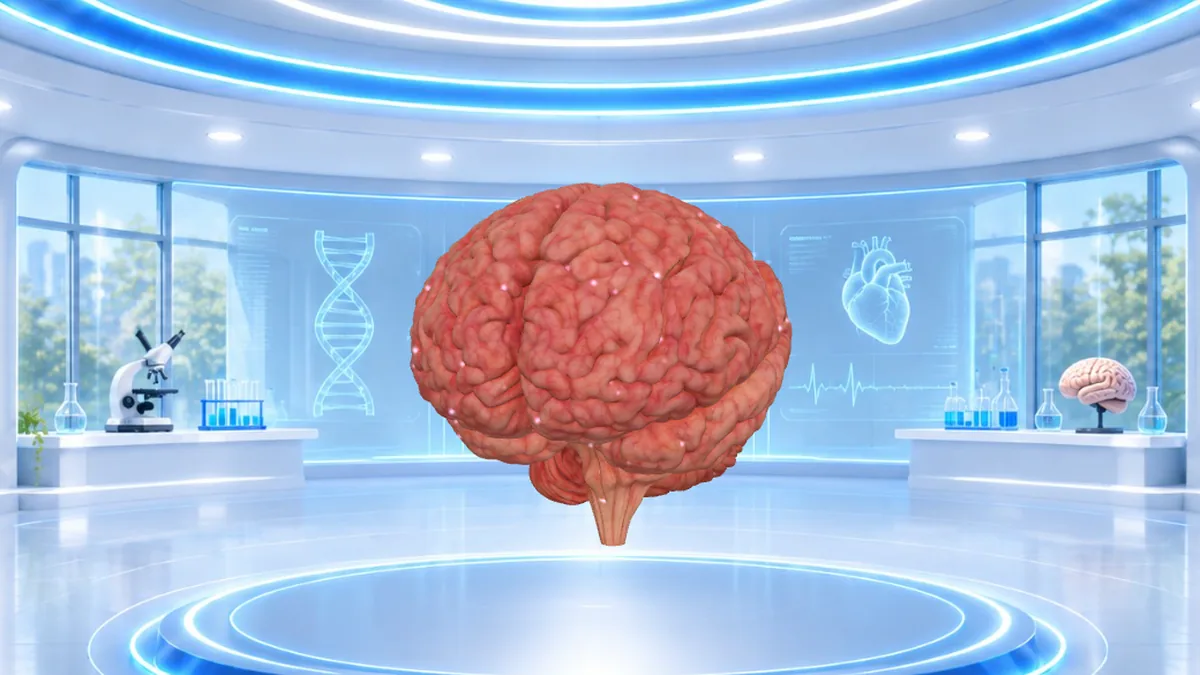
Left brain vs right brain at a glance
| Left half | Right half | |
|---|---|---|
| Controls movement on | The right side of the body | The left side of the body |
| Feels touch from | The right side of the body | The left side of the body |
| Language | Leads on speech and grammar in most people | Helps with tone of voice and the feeling behind words |
| Space and faces | Takes part | Leads on paying attention to space and on recognising faces |
| Maths | Exact sums | Rough estimates of size and amount |
| Creativity and logic | Uses both halves | Uses both halves |
Where the myth came from
In the 1960s, surgeons treated some people with severe epilepsy by cutting the bridge between the two halves of the brain. Tests on these split-brain patients showed that each half had its own strengths, and the research won a Nobel Prize. Popular books then stretched the findings into a personality test, with logical left-brained people and creative right-brained people.
What the science says
In 2013, researchers at the University of Utah looked at brain scans of more than 1,000 people. They found that some networks lean to one side, but people do not use one whole half more than the other. Logic, maths, art and music all use networks spread across both sides, talking to each other through the bridge in the middle.
Quick facts
- The bridge between the halves is called the corpus callosum and holds around 200 million nerve fibres.
- Nerves cross over, so the left half moves your right hand and the right half moves your left hand.
- In about 95 percent of right-handed people, the main language areas are in the left half.
- The two halves look almost the same, but they are not perfect mirror images.
- After an injury, the brain can sometimes move a job to other areas, even to the other half.
See it in 3D
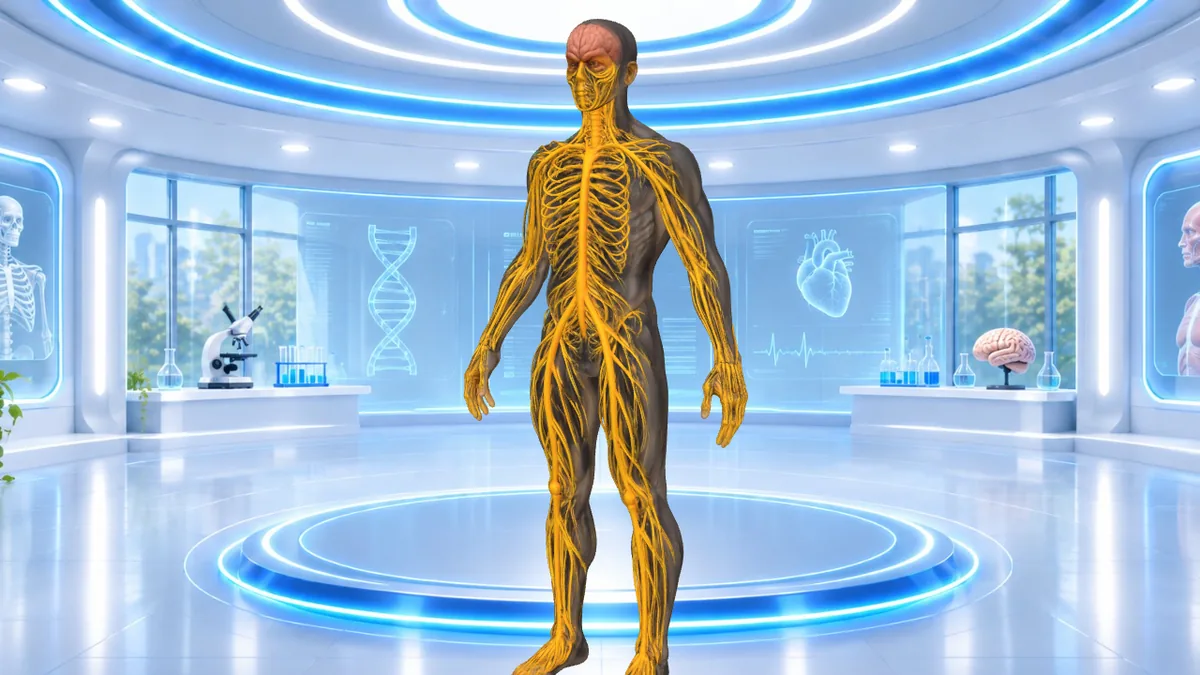
Left brain vs right brain questions
Are some people left-brained and others right-brained?
No. Large brain scan studies have found no sign that people rely on one whole half of the brain more than the other. Everyone uses both halves.
What does the left side of the brain control?
It controls movement and feeling on the right side of the body and, in most people, leads on speech and language.
What does the right side of the brain control?
It controls movement and feeling on the left side of the body and leads on things like attention to space and recognising faces.
Is creativity in the right side of the brain?
Not just there. Creative thinking uses networks spread across both halves of the brain working together.
What connects the two halves of the brain?
A thick band of about 200 million nerve fibres called the corpus callosum.
More face-offs: see all 3D comparisons.
The 3D Human Anatomy simulator is made by Julian Neagu, a solo founder in London, as part of VisionVix Simulators. It is free to use in the browser on desktop and phone, with no sign-up.