Wind vs Insect Pollination: Oak vs Apple in 3D
Flowers need pollen to get from one flower to another. Some, like oak trees, let the wind do it, so they make huge amounts of light pollen and have no need for pretty petals. Others, like apple blossom, attract insects with colour, scent and sweet nectar.


Wind vs insect pollination at a glance
| Wind | Insect | |
|---|---|---|
| Petals | Small, dull or missing | Large and brightly coloured |
| Scent and nectar | None | Usually both |
| Pollen | Huge amounts, light and smooth | Less, often sticky or spiky to cling to insects |
| Stamens | Long, hanging outside the flower | Inside the flower |
| Stigma | Large and feathery, to catch pollen from the air | Small and sticky, inside the flower |
| Examples | Oak, birch, hazel, grasses, wheat, maize | Apple, cherry, rose, sunflower, bean |
Why wind flowers make so much pollen
The wind does not aim. Almost all the pollen a wind-pollinated plant makes lands in the wrong place, so it has to make enormous amounts to make sure a little reaches another flower of the same kind. A single birch catkin can release millions of pollen grains. That is the pollen that gives people hay fever.
Why insect flowers spend on looks
Insects carry pollen straight from flower to flower, so less is wasted. In return the plant has to pay: bright petals and scent to advertise, and sugary nectar as a reward. Some flowers have lines that guide bees to the nectar, visible only in ultraviolet light, which bees can see.
Quick facts
- Oak trees have separate male and female flowers on the same tree.
- Apple trees usually need pollen from a different apple variety to make good fruit.
- Grass pollen is the most common cause of hay fever in the UK.
- Birds, bats and even some mammals pollinate flowers too.
- Some plants, such as peas, can pollinate themselves.
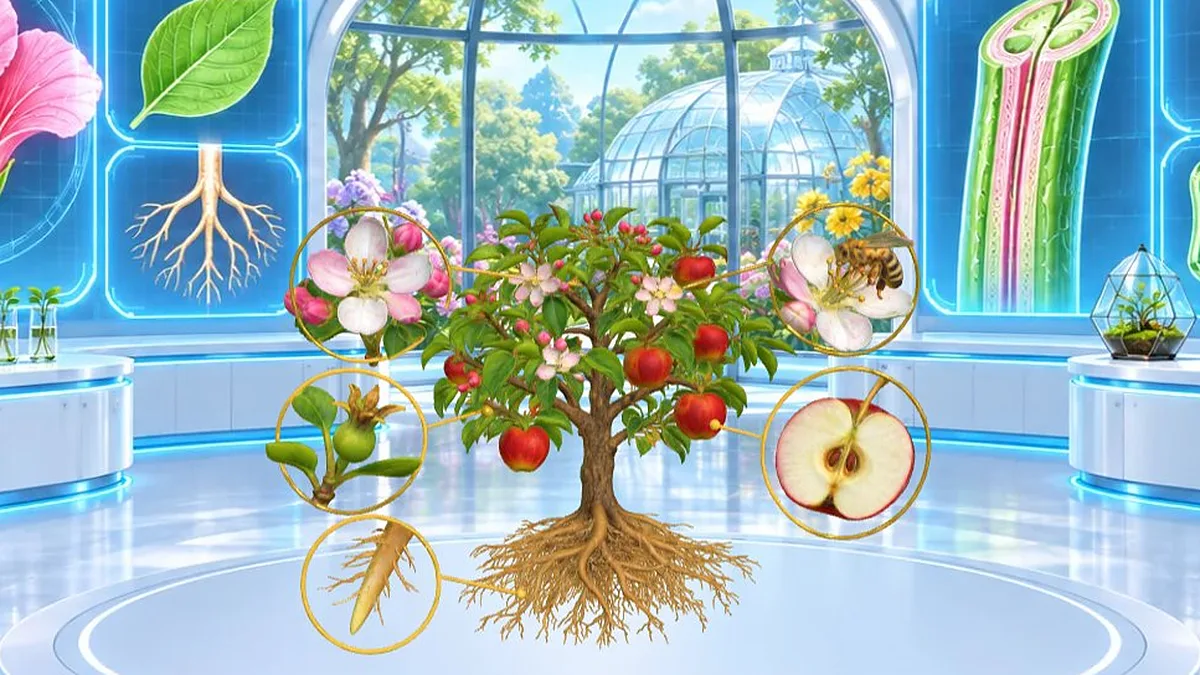
See them in 3D

Wind vs insect pollination questions
What is the difference between wind and insect pollination?
Wind-pollinated flowers are small and dull and make lots of light pollen. Insect-pollinated flowers are bright and scented, offer nectar and make less, stickier pollen.
Is an oak tree wind pollinated?
Yes. Male oak flowers hang in catkins that release pollen into the wind.
Is an apple tree insect pollinated?
Yes, mainly by bees.
Why do wind-pollinated flowers have feathery stigmas?
To catch pollen grains from the air.
Is grass wind pollinated?
Yes. Grasses, including wheat and maize, are pollinated by the wind.
More face-offs: see all 3D comparisons.
The 3D Plant Anatomy simulator is made by Julian Neagu, a solo founder in London, as part of VisionVix Simulators. It is free to use in the browser on desktop and phone, with no sign-up.