Aspirin Molecule in 3D: C₉H₈O₄ Structure and Facts
Aspirin, or acetylsalicylic acid, is a medicine used for pain, fever and to help prevent blood clots. It is related to a substance found in willow bark. In Molecule Studio you can spin the aspirin molecule, zoom in on each atom and measure its bonds.
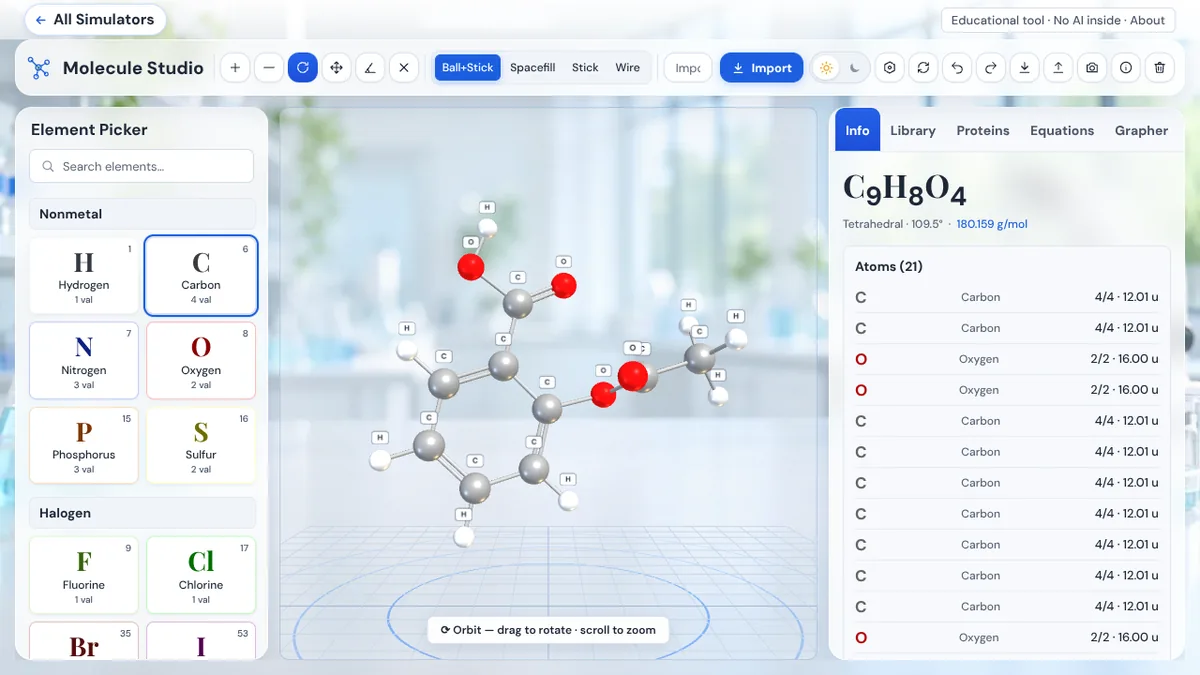 Explore in 3D
Aspirin quick facts
| Chemical formula | C₉H₈O₄ |
|---|---|
| Molar mass | 180.16 g/mol |
| Atoms in one molecule | 21 |
| Shape | Ring with two side groups |
| Group | Medicines |
What is aspirin used for?
- Pain and fever relief
- Helping prevent blood clots
- Reducing inflammation
Interesting facts about aspirin
- It is related to salicin, found in willow bark.
- It was first sold by Bayer in 1899.
- It works by blocking enzymes that make prostaglandins.
- It thins the blood by stopping platelets clumping.
What you can do in 3D
Turn the molecule to see it from every side, switch between ball and stick, space filling and wire views, and tap atoms to measure bond lengths and angles.
More medicines molecules
Aspirin questions
What is the formula of aspirin?
C9H8O4.
What is the chemical name of aspirin?
Acetylsalicylic acid.
How does aspirin work?
It blocks enzymes called COX that make prostaglandins, chemicals linked to pain and swelling.
Where does aspirin come from?
It was developed from salicylic acid, related to a substance in willow bark.
Molecule Studio is made by Julian Neagu, a solo founder in London, as part of VisionVix Simulators. It is free to use in the browser on desktop and phone, with no sign-up. In the tool, molecules load from the built-in library or from PubChem.