Physical vs Chemical Change: Examples and 3D Experiments
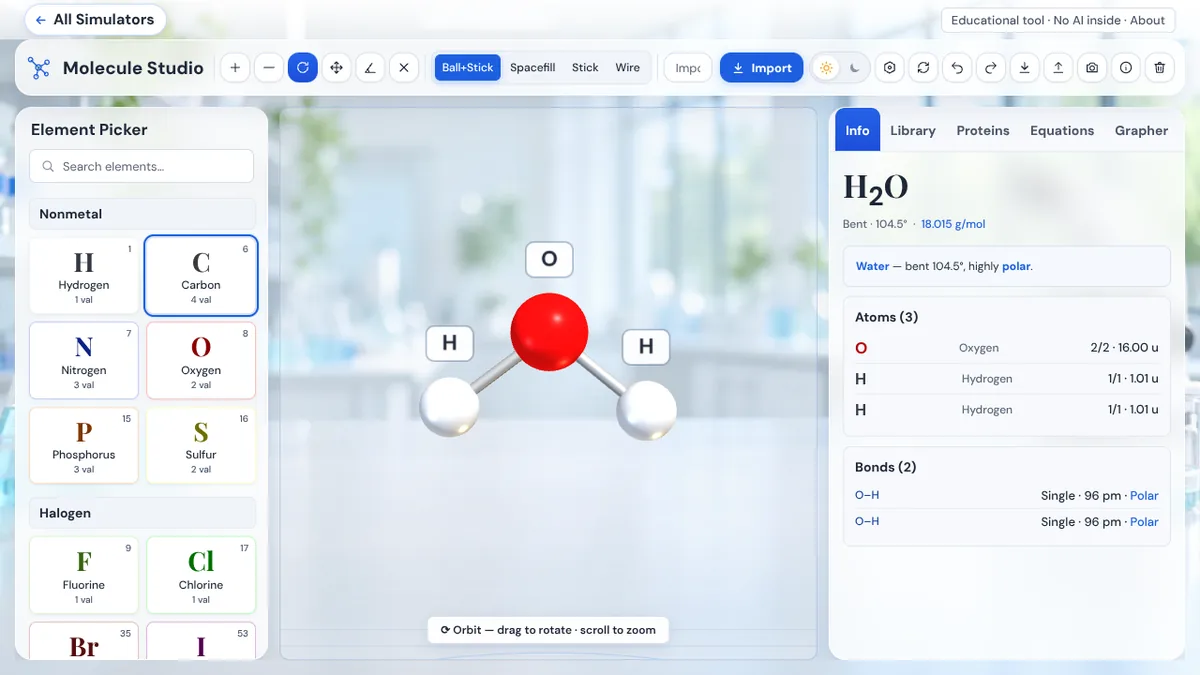
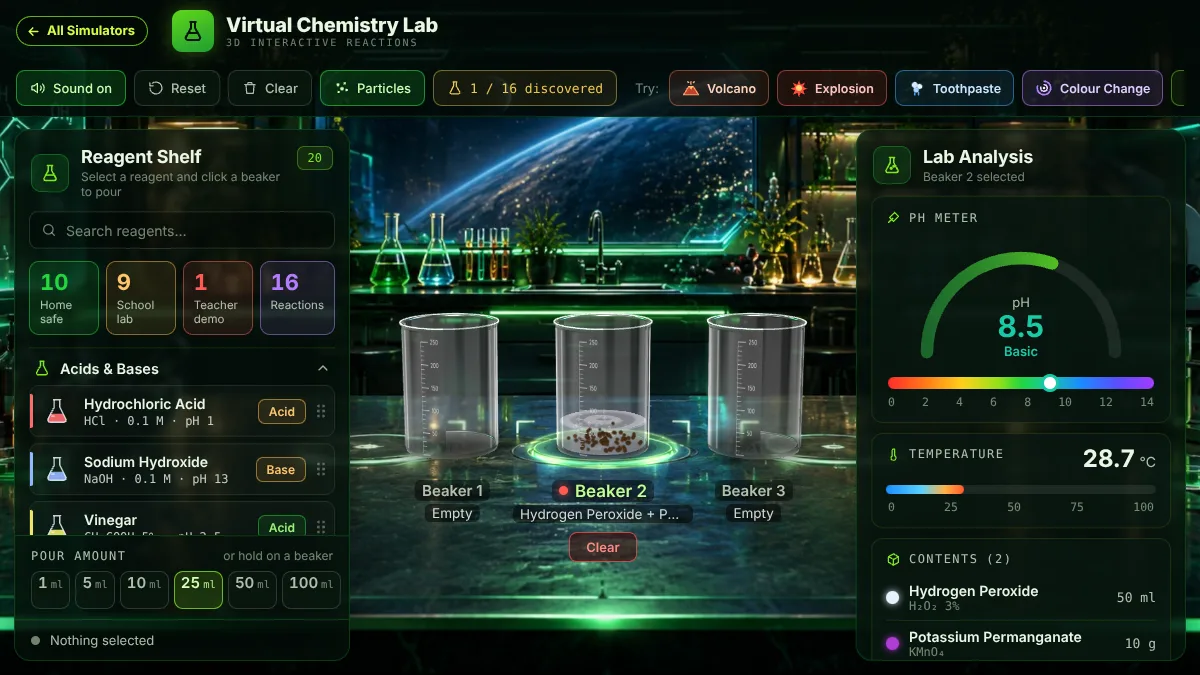
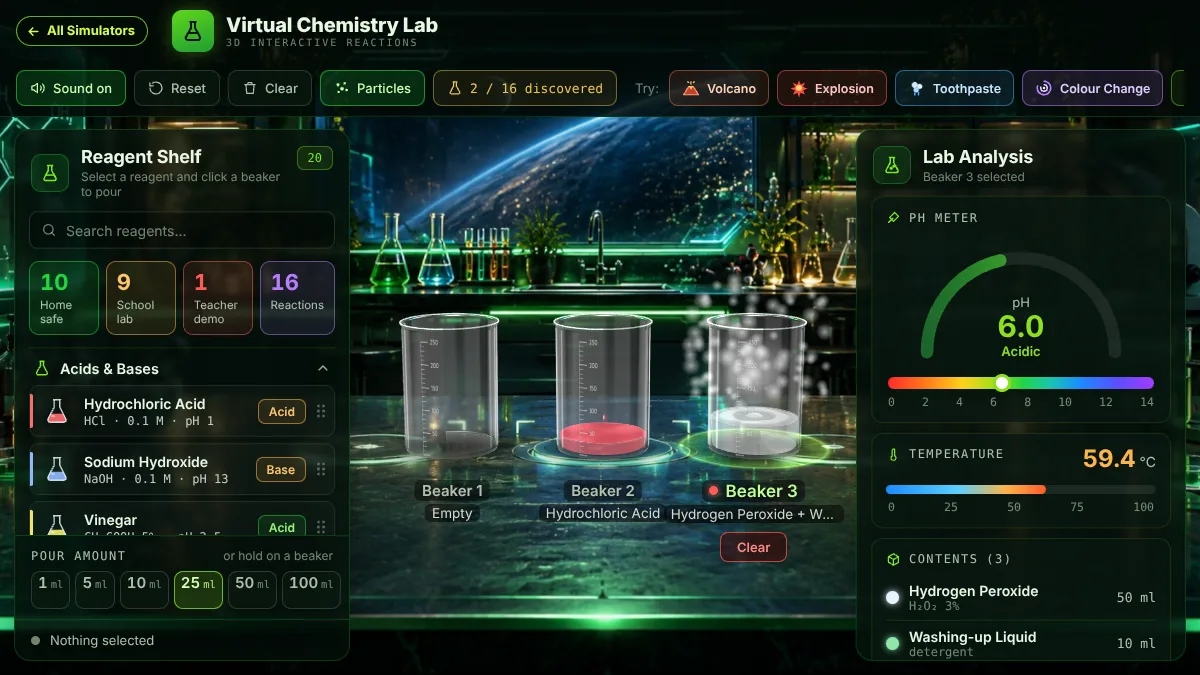
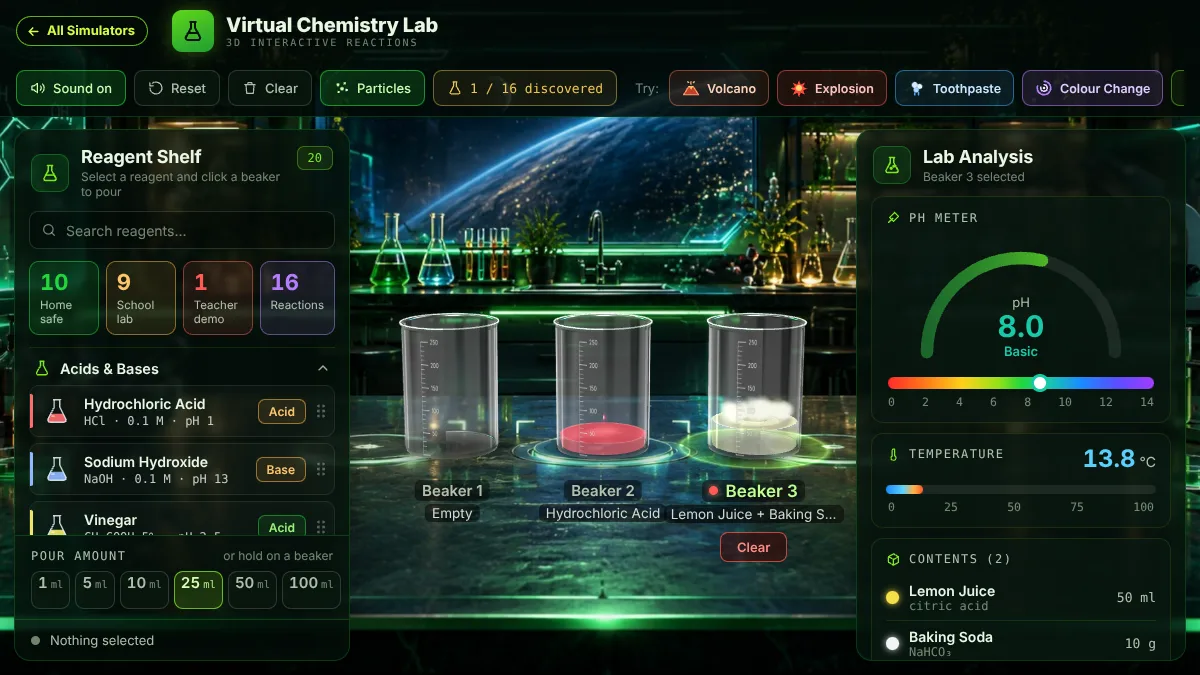
In a physical change, a substance changes its shape or state but stays the same substance: ice melting is still water. In a chemical change, atoms rearrange to make something new: burning, rusting, baking a cake. In the 3D Chemistry Lab you can watch chemical changes happen in the beaker.
Physical vs chemical change at a glance
| Physical | Chemical | |
|---|---|---|
| New substance made | No | Yes |
| Atoms | Stay bonded the same way | Break bonds and form new ones |
| Easy to reverse | Usually | Usually not |
| Signs | Change of shape, size or state | Gas bubbles, colour change, heat or light, a new solid, a new smell |
| Examples | Melting, freezing, boiling, dissolving sugar, cutting paper | Burning, rusting, cooking an egg, fizzing tablets, digestion |
| In the 3D lab | Pouring and mixing water | Colour Change, Elephant Toothpaste, Volcano |
How to tell them apart
Ask one question: is there a new substance at the end? When ice melts, the water molecules are the same H2O, just moving more freely. When wood burns, its atoms join with oxygen to make carbon dioxide, water and ash, which are new substances. Gas, colour change, heat, light or a solid appearing are strong hints that a chemical change has happened.
Tricky cases
Dissolving salt in water is a physical change: boil the water away and the salt is still there. Mixing baking soda and vinegar is chemical: the fizz is a new gas, carbon dioxide. Some physical changes are hard to reverse, like cutting hair, and a few chemical changes can be reversed, so reversibility is a clue, not a rule.
Quick facts
- Mass is conserved in both kinds of change: atoms are never lost.
- Rusting is a slow chemical change between iron, oxygen and water.
- Boiling an egg is a chemical change, as the proteins change shape for good.
- Changes of state, solid to liquid to gas, are all physical changes.
- Every chemical change involves energy going in or out.
More from the 3D lab
Physical vs chemical change questions
What is the difference between a physical and a chemical change?
A physical change does not make a new substance. A chemical change rearranges atoms to make one or more new substances.
Is melting ice a physical or chemical change?
Physical. The water molecules stay the same; only their state changes.
Is burning a physical or chemical change?
Chemical. Burning makes new substances, such as carbon dioxide and water.
Is dissolving sugar a chemical change?
No, it is a physical change. The sugar molecules spread through the water but stay the same.
What are the signs of a chemical change?
Gas bubbles, a colour change, heat or light given out, a new solid forming, or a new smell.
More face-offs: see all 3D comparisons.
The 3D Chemistry Lab is made by Julian Neagu, a solo founder in London, as part of VisionVix Simulators. It is free to use in the browser on desktop and phone, with no sign-up.