Digestive System in 3D: Stomach, Intestines and How Food Is Digested
The digestive system breaks food down into nutrients the body can use. Food travels from the mouth down the oesophagus to the stomach, then through the small and large intestines. In the 3D Anatomy simulator you can open the digestive system and tap each part along the way.
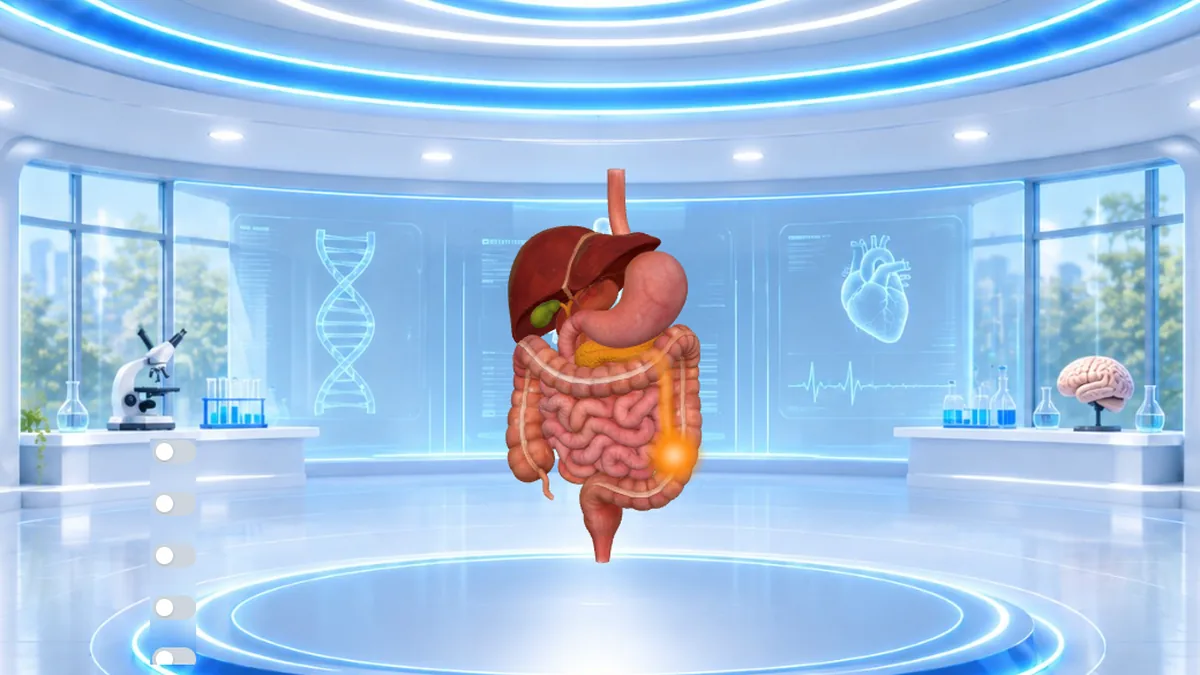 Explore in 3D
Digestive System quick facts
| Main parts | Mouth, oesophagus, stomach, small intestine, large intestine |
|---|---|
| Small intestine | About 6 metres long in an adult |
| Large intestine | About 1.5 metres long |
| Helpers | Liver, gallbladder and pancreas |
| Trip time | Usually one to three days |
Interesting facts about the digestive system
- Most nutrients are absorbed in the small intestine, which is lined with millions of tiny finger-like villi.
- The stomach mixes food with acid and enzymes to start breaking it down.
- The large intestine mainly takes water back into the body.
- Muscles in the gut walls squeeze food along in waves, a movement called peristalsis.
- Trillions of helpful bacteria live in the large intestine.
What you can do in 3D
Open the digestive system to see the stomach and the coils of the intestines on their own, then tap each part to see what happens to food there.
More body systems in 3D
Tap any part to open its page.
Digestive System questions
What are the main organs of the digestive system?
The mouth, oesophagus, stomach, small intestine and large intestine, helped by the liver, gallbladder and pancreas.
How long is the small intestine?
About 6 metres in an adult. It is folded up to fit inside the belly.
Where are nutrients absorbed?
Mostly in the small intestine, through tiny folds called villi.
How long does it take to digest food?
Food usually takes about one to three days to pass all the way through the digestive system.
What does the large intestine do?
It takes water back into the body and turns what is left into waste.
The 3D Anatomy simulator is made by Julian Neagu, a solo founder in London, as part of VisionVix Simulators. It is free to use in the browser on desktop and phone, with no sign-up. This page is for learning and is not medical advice.