Lungs Anatomy in 3D: How Breathing Works
The lungs are two spongy organs that fill most of the chest. With every breath they take in oxygen and let carbon dioxide out. In the 3D Anatomy simulator you can open the lungs on their own and see them breathe, with each part labelled.
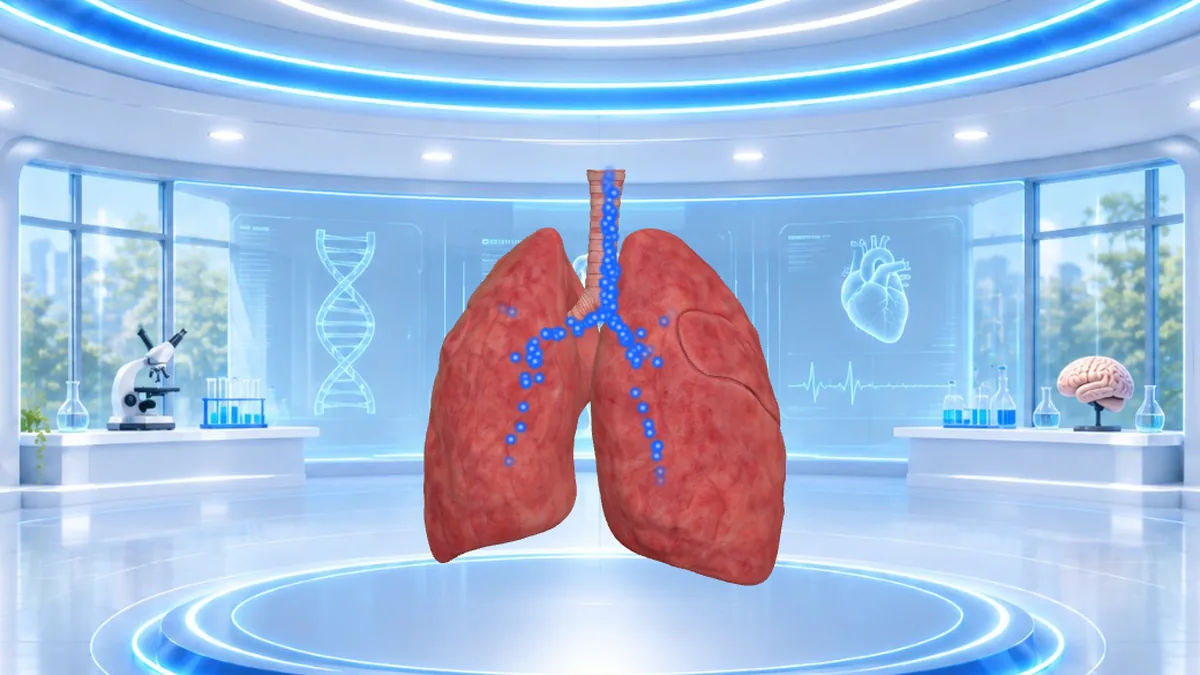 Explore in 3D
Lungs quick facts
| Where they are | In the chest, inside the ribcage, either side of the heart |
|---|---|
| Lobes | 3 in the right lung, 2 in the left |
| Air sacs | Hundreds of millions of alveoli |
| Breaths at rest | About 12 to 20 a minute |
| Main muscle | The diaphragm |
Interesting facts about the lungs
- The left lung is a little smaller than the right, to make room for the heart.
- Air travels down the windpipe, then into smaller and smaller tubes called bronchi and bronchioles.
- Oxygen passes into the blood through tiny air sacs called alveoli.
- Spread out flat, the inside surface of the lungs would cover about 70 square metres.
- The diaphragm, a dome-shaped muscle under the lungs, does most of the work of breathing.
What you can do in 3D
Open the lungs to watch them breathe, turn them to see both lobes and the airways, and tap each part to learn what it does.
More organs in 3D
Tap any part to open its page.
Lungs questions
How many lobes do the lungs have?
Five in total: three in the right lung and two in the left lung.
Why is the left lung smaller?
The heart sits slightly to the left, so the left lung is smaller to make room for it.
How does oxygen get into the blood?
Air reaches tiny air sacs called alveoli. Oxygen passes through their thin walls into the blood in the capillaries around them.
What muscle helps you breathe?
The diaphragm. It flattens to pull air in and relaxes to push air out.
How many times do you breathe in a minute?
At rest, adults usually breathe about 12 to 20 times a minute.
The 3D Anatomy simulator is made by Julian Neagu, a solo founder in London, as part of VisionVix Simulators. It is free to use in the browser on desktop and phone, with no sign-up. This page is for learning and is not medical advice.