Skin Anatomy in 3D: Layers, Sweat and Temperature
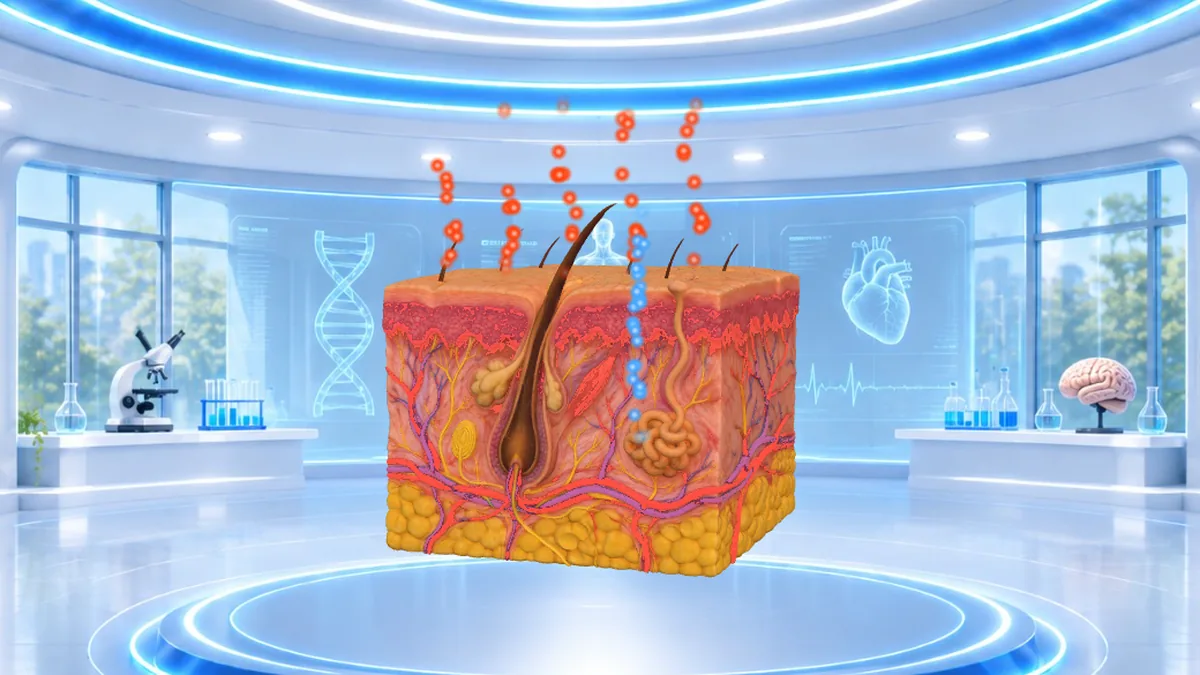
The skin is the body's largest organ. It is a waterproof, self-repairing layer that protects you from germs, senses touch and helps keep your temperature steady. In the 3D Anatomy simulator you can open a cutaway of the skin and see each layer.
 Explore in 3D
Skin quick facts
| Size | About 1.5 to 2 square metres in an adult |
|---|---|
| Layers | Epidermis, dermis and the fatty layer below |
| Contains | Sweat glands, hair roots, blood vessels and nerves |
| Renews | The outer layer replaces itself about every month |
Interesting facts about skin
- Skin is the largest organ of the human body.
- The outer layer, the epidermis, is constantly shedding and replacing itself.
- Sweat cools the body as it dries on the skin.
- Melanin made in the skin gives it its colour and helps protect against sunlight.
- Nerve endings in the dermis sense touch, pressure, heat and pain.
What you can do in 3D
Open the skin cutaway to see the layers stacked from the surface down, with sweat glands and hair roots, and tap each part.
More organs in 3D
Tap any part to open its page.
Skin questions
What is the largest organ of the body?
The skin. It covers about 1.5 to 2 square metres in an adult.
What are the layers of the skin?
The epidermis on the outside, the dermis underneath, and a fatty layer below that.
How does sweat cool you down?
Sweat comes out onto the skin and takes heat away as it dries.
What gives skin its colour?
A pigment called melanin, which also helps protect the skin from sunlight.
How often does skin renew itself?
The outer layer of skin replaces itself roughly every month.
The 3D Anatomy simulator is made by Julian Neagu, a solo founder in London, as part of VisionVix Simulators. It is free to use in the browser on desktop and phone, with no sign-up. This page is for learning and is not medical advice.