Thyroid and Larynx in 3D: Hormones and the Voice Box
The thyroid and larynx sit together at the front of the neck. The thyroid is a butterfly-shaped gland that sets how fast the body uses energy, and the larynx, or voice box, makes the sound of your voice. In the 3D Anatomy simulator you can open them together and tap each part.
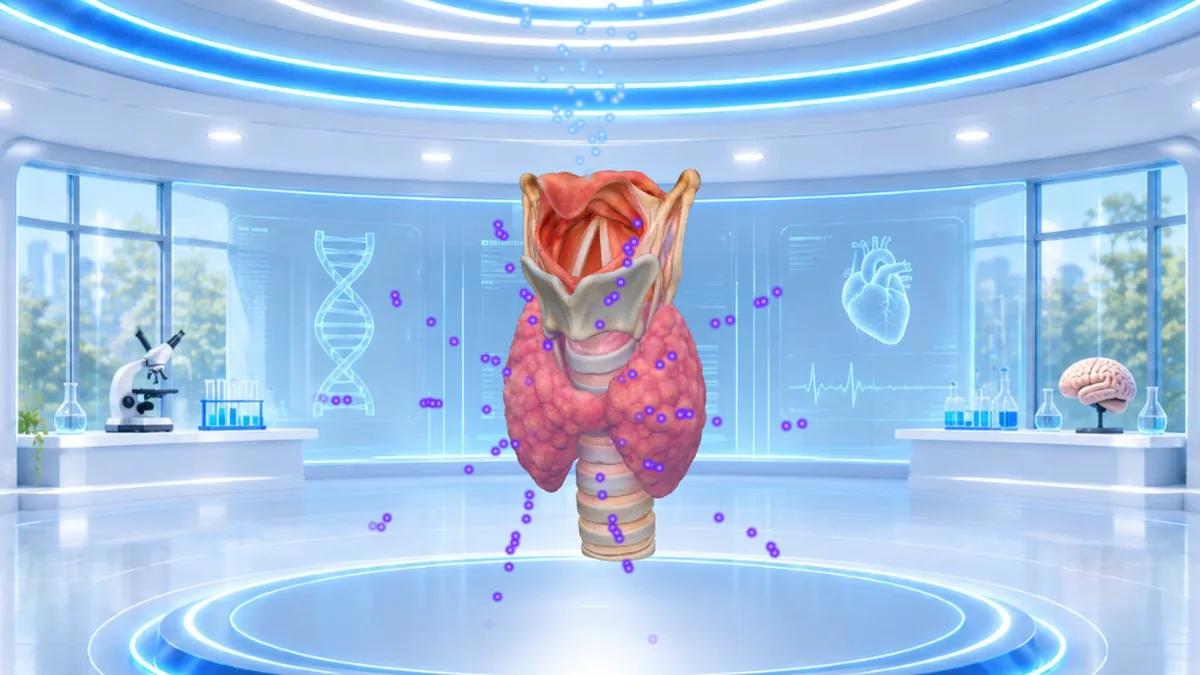 Explore in 3D
Thyroid and Larynx quick facts
| Where they are | Front of the neck |
|---|---|
| Thyroid shape | Butterfly, with two lobes |
| Thyroid hormones | Control how fast the body uses energy |
| Larynx | The voice box, at the top of the windpipe |
| Makes sound with | The vocal folds |
Interesting facts about the thyroid and larynx
- The thyroid needs iodine from food to make its hormones.
- Thyroid hormones affect heart rate, body temperature and energy.
- The vocal folds in the larynx vibrate when air passes over them, making sound.
- The bump at the front of the neck, often called the Adam's apple, is part of the larynx.
- A flap called the epiglottis covers the larynx when you swallow, so food goes down the right way.
What you can do in 3D
Open the thyroid and larynx to see the butterfly gland wrapped around the windpipe and the voice box above it, then tap each part.
More organs in 3D
Tap any part to open its page.
Thyroid and Larynx questions
What does the thyroid do?
It makes hormones that control how fast the body uses energy, affecting heart rate, temperature and growth.
Where is the thyroid?
At the front of the neck, wrapped around the windpipe just below the voice box.
What is the larynx?
The voice box, at the top of the windpipe. It holds the vocal folds that vibrate to make sound.
What is the Adam's apple?
The bump at the front of the neck, made by cartilage of the larynx. It is usually bigger in men.
Why does the thyroid need iodine?
Iodine is a building block of thyroid hormones, so the gland needs it from food to work properly.
The 3D Anatomy simulator is made by Julian Neagu, a solo founder in London, as part of VisionVix Simulators. It is free to use in the browser on desktop and phone, with no sign-up. This page is for learning and is not medical advice.