Tongue Anatomy in 3D: Taste Buds and the Five Tastes
The tongue is a strong, flexible muscle that tastes food, helps you chew and swallow, and shapes the sounds of speech. Its surface is covered in tiny bumps that hold the taste buds. In the 3D Anatomy simulator you can open the tongue and tap each part.
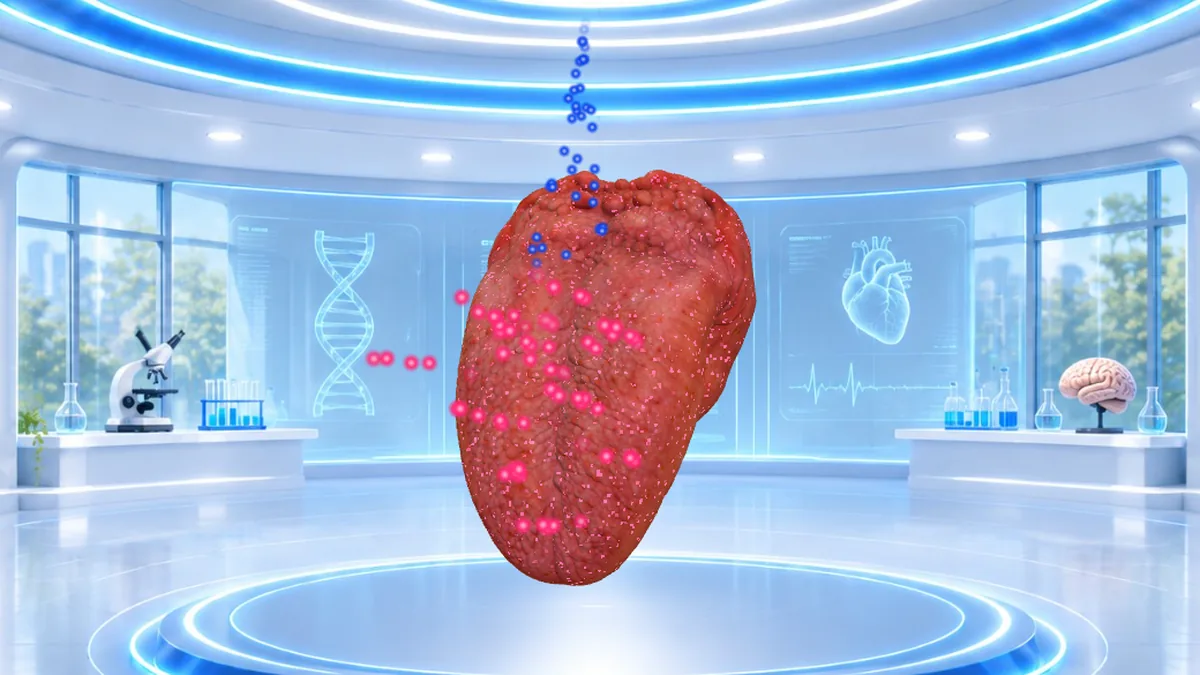 Explore in 3D
Tongue quick facts
| Made of | A group of muscles |
|---|---|
| Taste buds | Thousands, mostly on the small bumps called papillae |
| Basic tastes | Sweet, sour, salty, bitter and umami |
| Jobs | Taste, chewing, swallowing and speech |
Interesting facts about the tongue
- The five basic tastes are sweet, sour, salty, bitter and umami (savoury).
- All parts of the tongue can sense all five tastes, so the old tongue map is a myth.
- Much of what we call flavour actually comes from smell.
- The tongue is made of several muscles working together, so it can bend in many ways.
- Taste buds are replaced every week or two.
What you can do in 3D
Open the tongue to see its surface up close, turn it to see the back of the tongue, and tap each part to learn about taste.
More senses in 3D
Tap any part to open its page.
Tongue questions
What are the five basic tastes?
Sweet, sour, salty, bitter and umami, a savoury taste found in foods like cheese and tomatoes.
Is the tongue taste map true?
No. All areas of the tongue can sense all five tastes.
How many taste buds do we have?
Thousands. Most sit on the small bumps on the tongue called papillae.
Is the tongue a muscle?
Yes. It is made of several muscles working together.
Why does food taste bland when you have a cold?
Much of flavour comes from smell, so a blocked nose makes food taste of less.
The 3D Anatomy simulator is made by Julian Neagu, a solo founder in London, as part of VisionVix Simulators. It is free to use in the browser on desktop and phone, with no sign-up. This page is for learning and is not medical advice.