Adrenaline Molecule in 3D: C₉H₁₃NO₃ Structure and Facts
Adrenaline, also called epinephrine, is the hormone behind the fight or flight response. It makes your heart beat faster and gives a quick burst of energy. In Molecule Studio you can spin the adrenaline molecule, zoom in on each atom and measure its bonds.
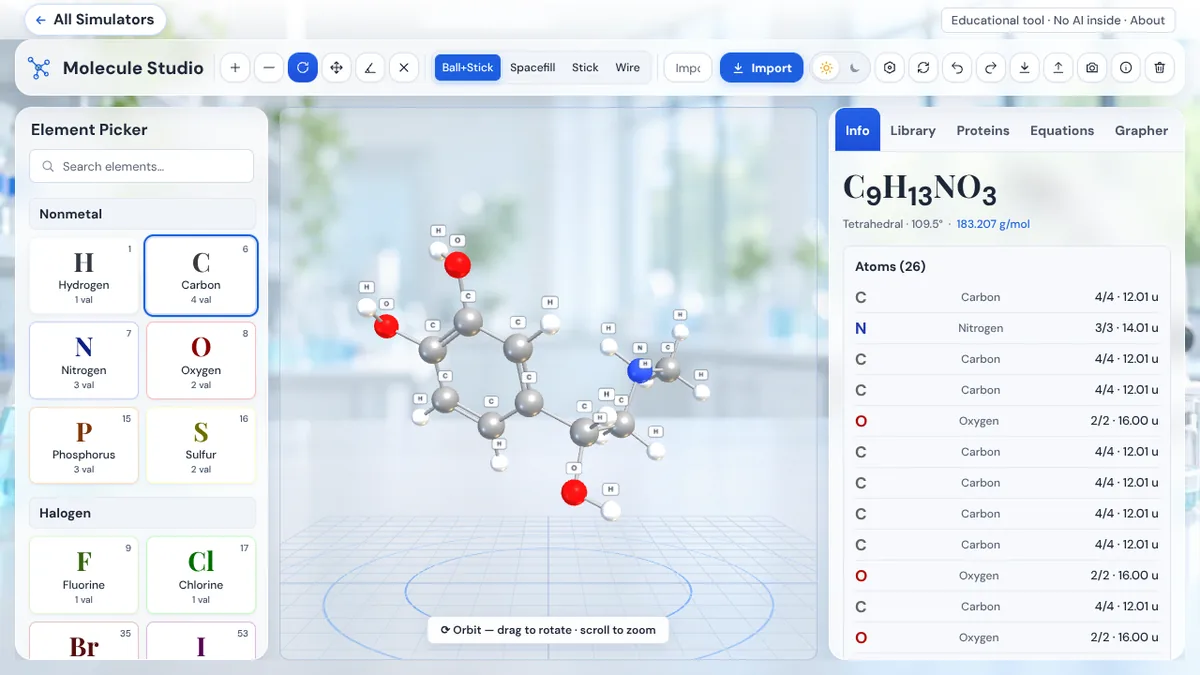 Explore in 3D
Adrenaline quick facts
| Chemical formula | C₉H₁₃NO₃ |
|---|---|
| Molar mass | 183.21 g/mol |
| Atoms in one molecule | 26 |
| Shape | Ring with a side chain |
| Group | Body |
What is adrenaline used for?
- The body's stress response
- Emergency treatment for severe allergic reactions
- Treating cardiac arrest
Interesting facts about adrenaline
- It is made by the adrenal glands above the kidneys.
- It is called epinephrine in the US.
- It raises heart rate and opens up the airways.
- Auto-injector pens of adrenaline treat severe allergic reactions.
What you can do in 3D
Turn the molecule to see it from every side, switch between ball and stick, space filling and wire views, and tap atoms to measure bond lengths and angles.
More body molecules
Adrenaline questions
What is the formula of adrenaline?
C9H13NO3.
Is adrenaline the same as epinephrine?
Yes. Epinephrine is the name used in the United States.
What does adrenaline do?
It prepares the body for action, raising heart rate, opening airways and releasing energy.
Where is adrenaline made?
In the adrenal glands, which sit on top of the kidneys.
Molecule Studio is made by Julian Neagu, a solo founder in London, as part of VisionVix Simulators. It is free to use in the browser on desktop and phone, with no sign-up. In the tool, molecules load from the built-in library or from PubChem.