Horse vs Cow: One Stomach vs Four, Compared in 3D
Horses and cows both live on grass, which is hard to digest. They solve the problem in opposite ways. A cow has a stomach with four compartments and chews its food twice. A horse has one simple stomach and digests grass further along, in a huge pouch of its gut called the caecum.
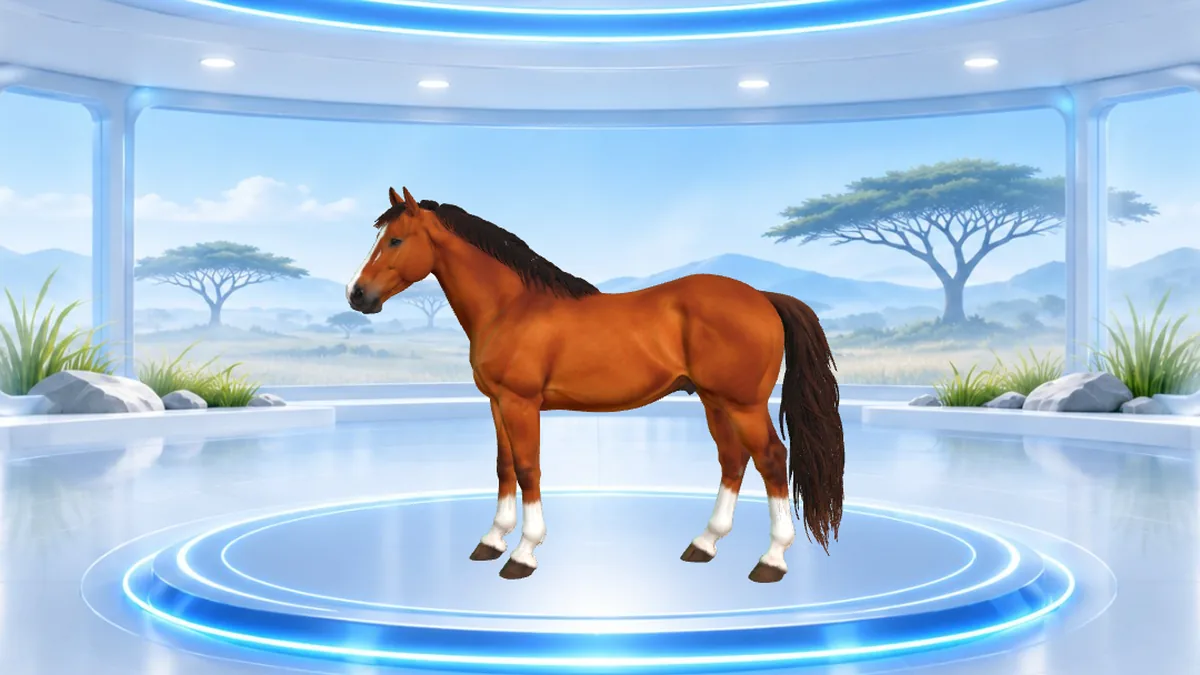
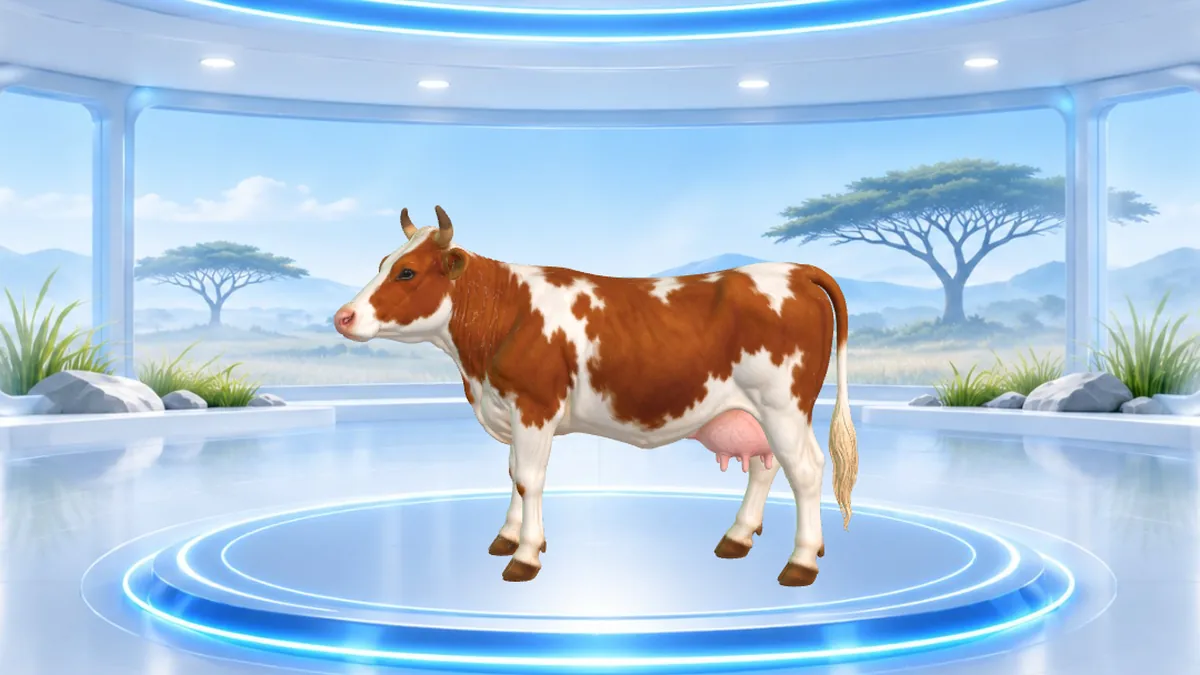
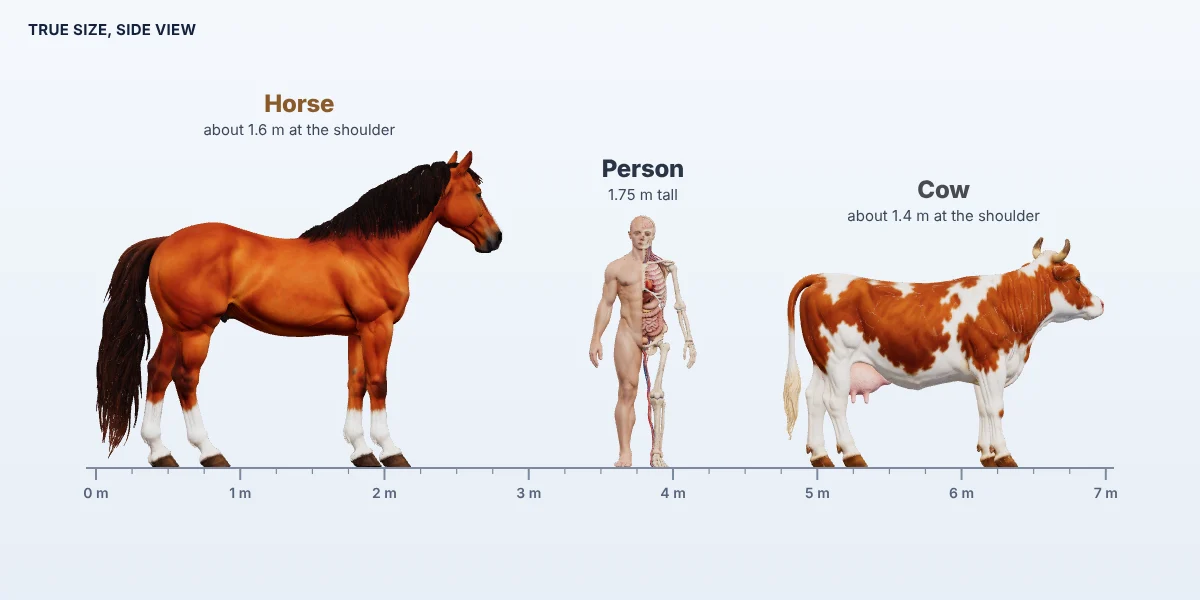
Horse vs cow: true size
Horse vs cow at a glance
| Horse | Cow | |
|---|---|---|
| Size | About 1.6 m at the shoulder, around 500 kg | About 1.4 m at the shoulder, around 600 to 700 kg |
| Stomach | One simple stomach | One stomach with four compartments |
| Where grass is broken down | In the caecum and large intestine, after the stomach | In the rumen, before the rest of the gut |
| Chewing the cud | No | Yes, it brings food back up to chew again |
| Front teeth | Upper and lower | Lower only, with a hard pad on top |
| Toes | One hoof per leg | Two toes per hoof |
| Top speed | Around 70 km/h at a gallop | Around 40 km/h at most |
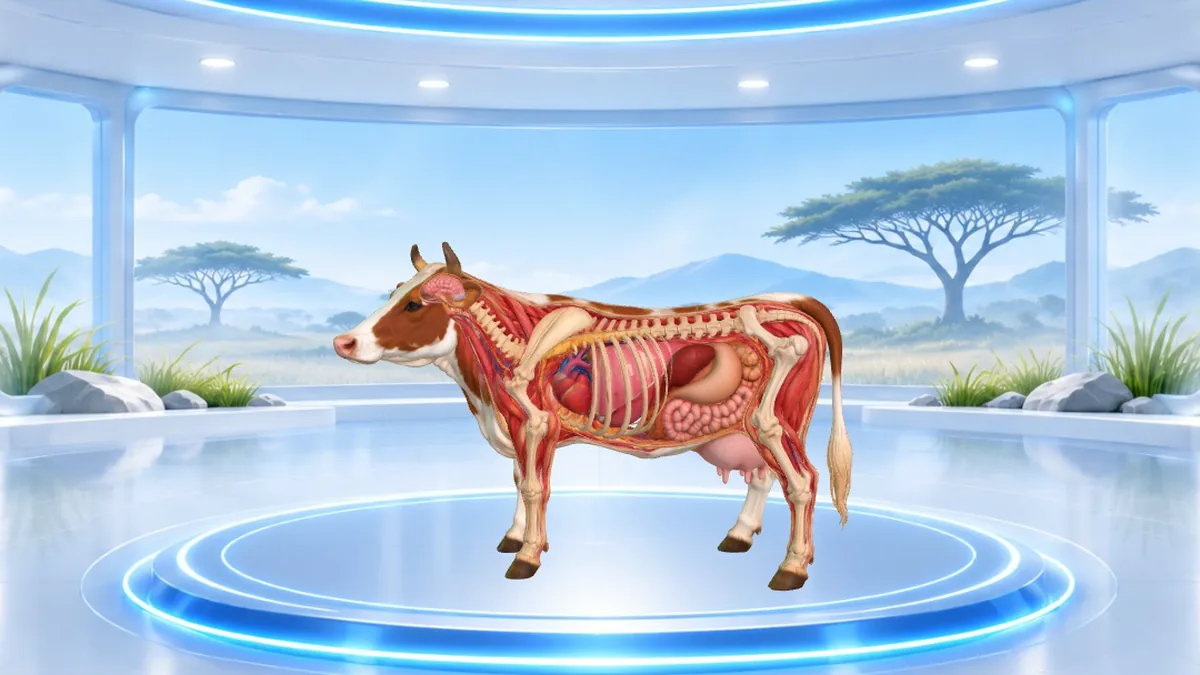
How a cow digests grass
A cow tears grass with its tongue and swallows it almost unchewed into the rumen, a giant fermenting vat full of microbes. Later it brings the food back up and chews it again, called chewing the cud. The food then passes through the reticulum, omasum and finally the abomasum, the true stomach. This slow system squeezes a lot of energy out of poor-quality grass.
How a horse digests grass
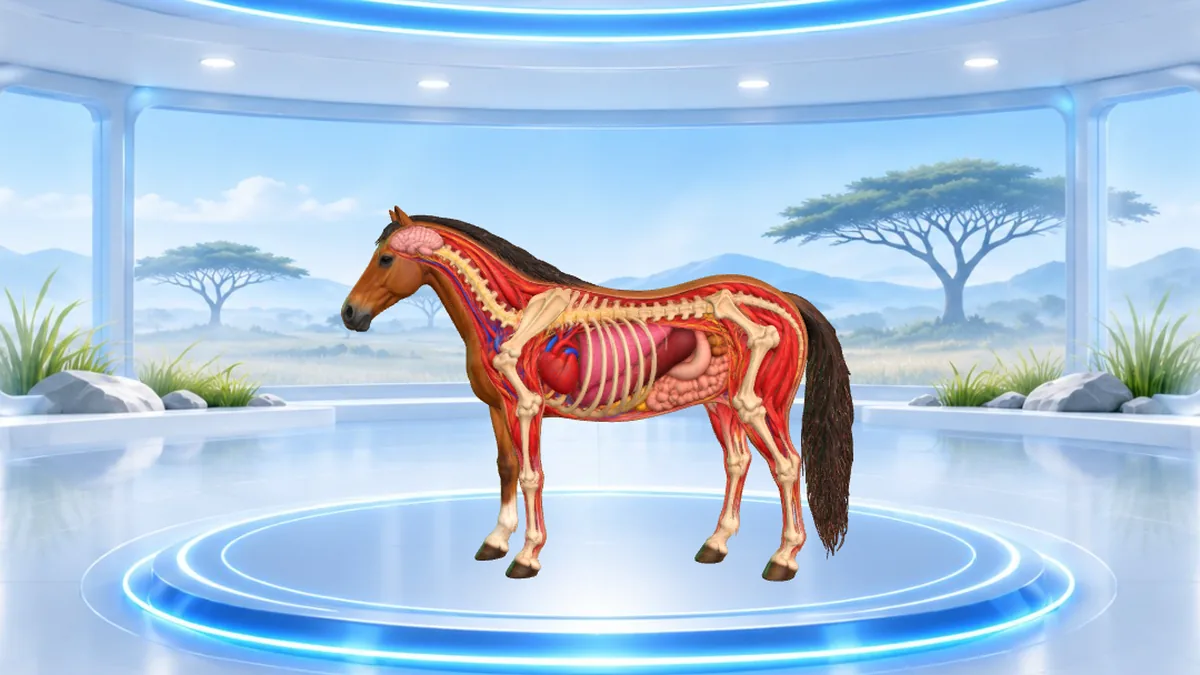
A horse chews its food well first and sends it through a fairly small stomach and the small intestine. The tough fibre is then fermented by microbes in the caecum and large intestine, near the end of the gut. It gets less out of each mouthful than a cow, so horses eat for much of the day, but their food passes through faster.
Quick facts
- A cow’s rumen can hold well over 100 litres.
- Horses can hardly vomit, which is why stomach problems can be serious for them.
- Cows burp out methane made by the microbes in their rumen.
- Sheep, goats, deer and giraffes are also ruminants like cows.
- Rhinos and zebras digest grass like horses, in the hindgut.
Look inside both
Horse vs cow questions
Does a horse have four stomachs like a cow?
No. A horse has one simple stomach. A cow has one stomach divided into four compartments.
What are the four parts of a cow’s stomach?
The rumen, reticulum, omasum and abomasum.
Do horses chew the cud?
No. Only ruminants such as cows, sheep and goats chew the cud.
Which is bigger, a horse or a cow?
They are similar. A horse is usually a little taller at the shoulder; a dairy cow is often a little heavier.
How do horses digest grass?
Microbes in the caecum and large intestine, near the end of the gut, break down the fibre.
More face-offs: see all 3D comparisons.
The 3D Animal Anatomy simulator is made by Julian Neagu, a solo founder in London, as part of VisionVix Simulators. It is free to use in the browser on desktop and phone, with no sign-up.