Cow Anatomy in 3D: Four Stomach Chambers, Skeleton and Organs
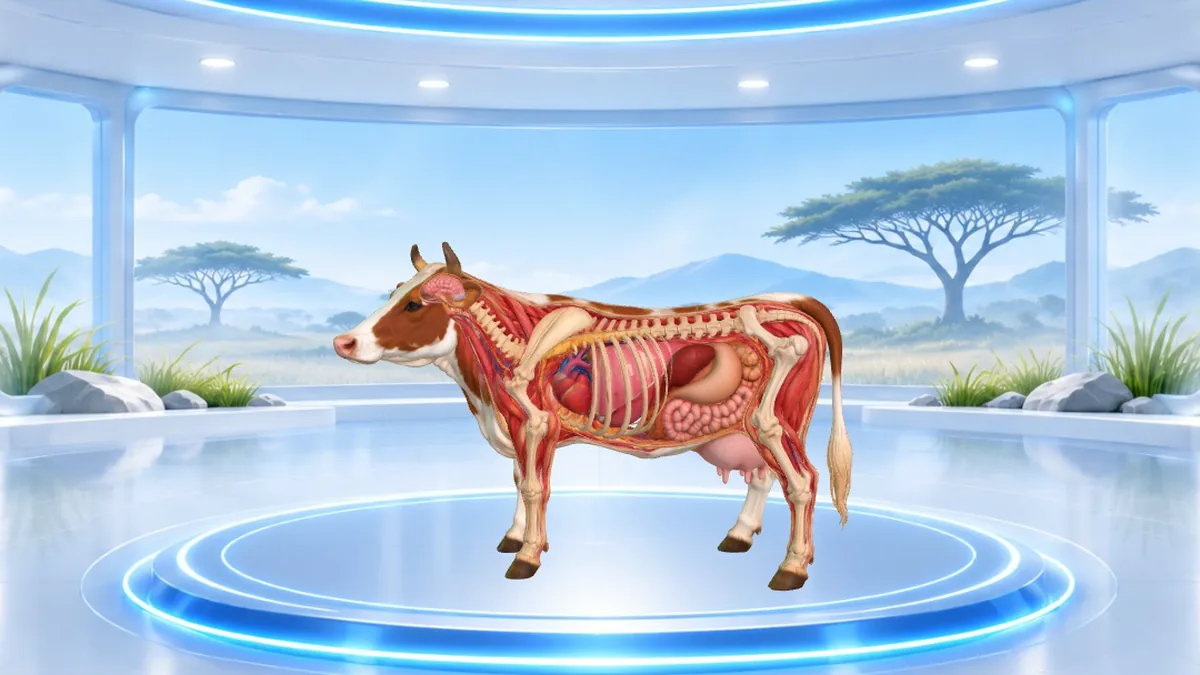
Cows can live on grass because of their remarkable stomach, with four chambers working like a fermentation tank. In the 3D Animal Anatomy simulator you can turn a cow around, look inside to find the rumen and see its skeleton.
 Explore in 3D
Three ways to see the cow
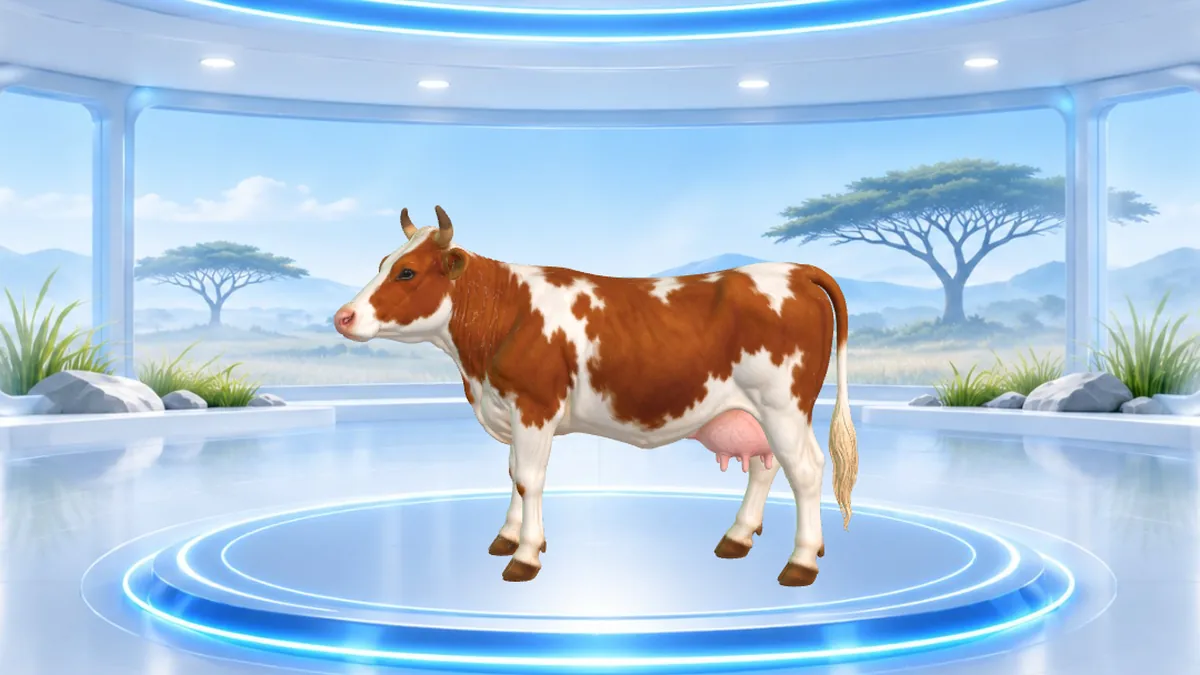 Full body
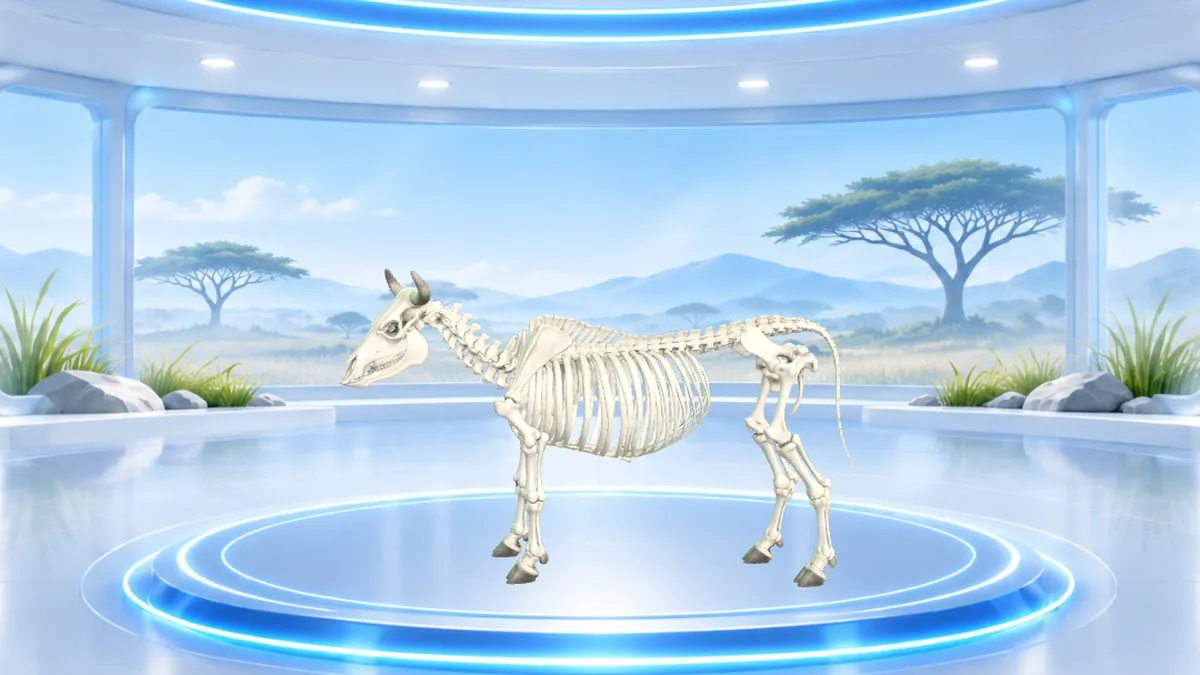 Skeleton
Cow quick facts
| Animal group | Mammal, cattle family |
|---|---|
| Stomach | Four chambers: rumen, reticulum, omasum and abomasum |
| Rumen size | Can hold over 150 litres |
| Upper front teeth | None, a hard dental pad instead |
| Diet | Grass and plants |
The cow skeleton
A cow's skeleton is heavy and sturdy to carry its large body and big belly. Like a horse, each leg ends in hooves, but cows walk on two toes per foot, which is why their hooves are split.
Inside the cow
In the Inside view you can tap these labels on the 3D model:
- Brain
- Controls every move, sense and thought.
- Heart
- Pumps blood around the whole body, all day and night.
- Lungs
- Take in oxygen from the air with every breath.
- Stomach
- The rumen, the biggest of four stomach chambers. Its microbes break down grass.
- Intestines
- Very long guts that finish digesting grass.
Interesting facts about cows
- The rumen, the biggest stomach chamber, can hold over 150 litres and is full of microbes that break down grass.
- Cows bring food back up to chew it again, called chewing the cud.
- They have no upper front teeth, just a tough pad that the bottom teeth press against.
- Their split hooves come from walking on two toes on each foot.
- Cows spend many hours a day chewing.
More animals in 3D
Cow anatomy questions
How many stomachs does a cow have?
One stomach with four chambers: the rumen, reticulum, omasum and abomasum.
What does the rumen do?
It is the biggest chamber, where microbes break down tough grass before it moves on.
Why do cows chew the cud?
They bring partly digested food back up to chew it again, which breaks the grass into smaller pieces for the microbes to work on.
Do cows have top teeth?
Not at the front. They have a hard dental pad there, but they do have molars at the back on top.
The 3D Animal Anatomy simulator is made by Julian Neagu, a solo founder in London, as part of VisionVix Simulators. It is free to use in the browser on desktop and phone, with no sign-up.