Lion Anatomy in 3D: Skeleton, Organs and the Big Cat Body
Lions are the big cat hunters of the savanna, built for short bursts of power and long hours of rest. In the 3D Animal Anatomy simulator you can turn a lion around, look inside at its organs and see the skeleton under the mane.
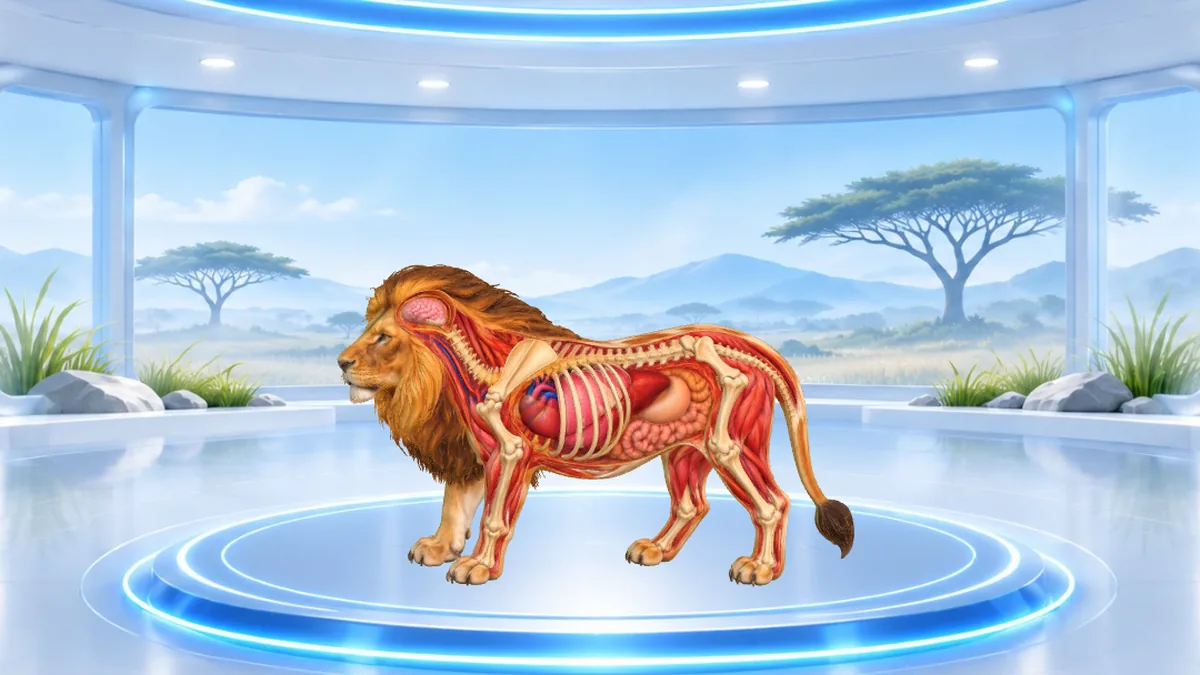 Explore in 3D
Three ways to see the lion
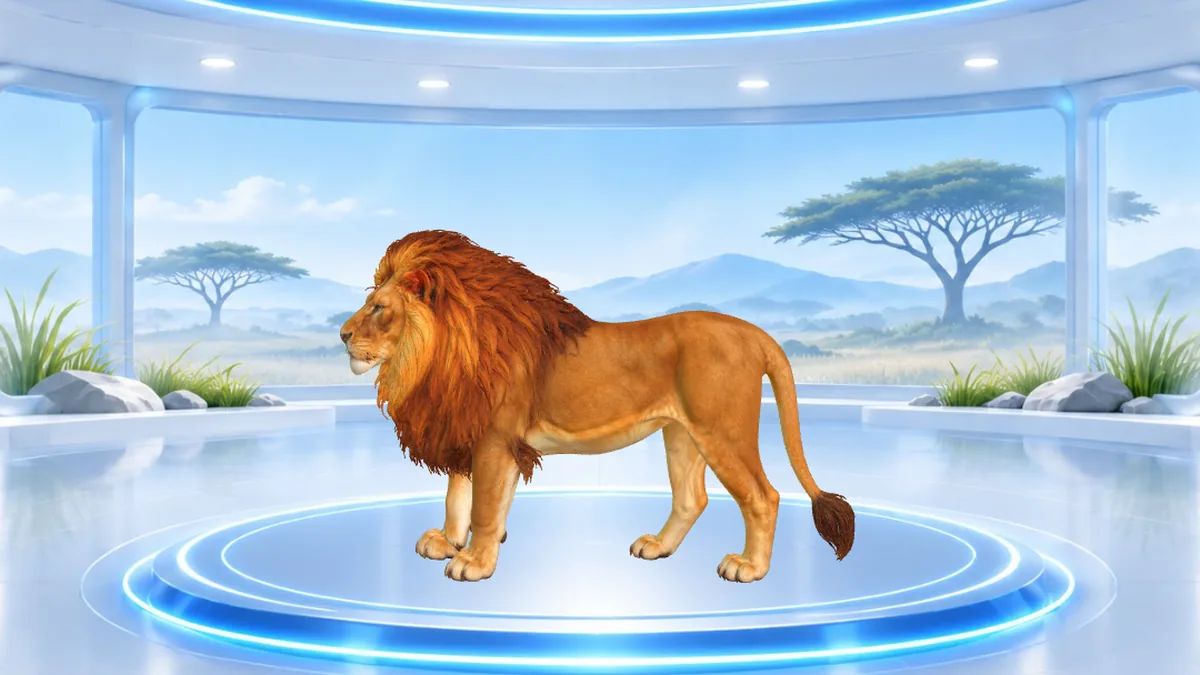 Full body
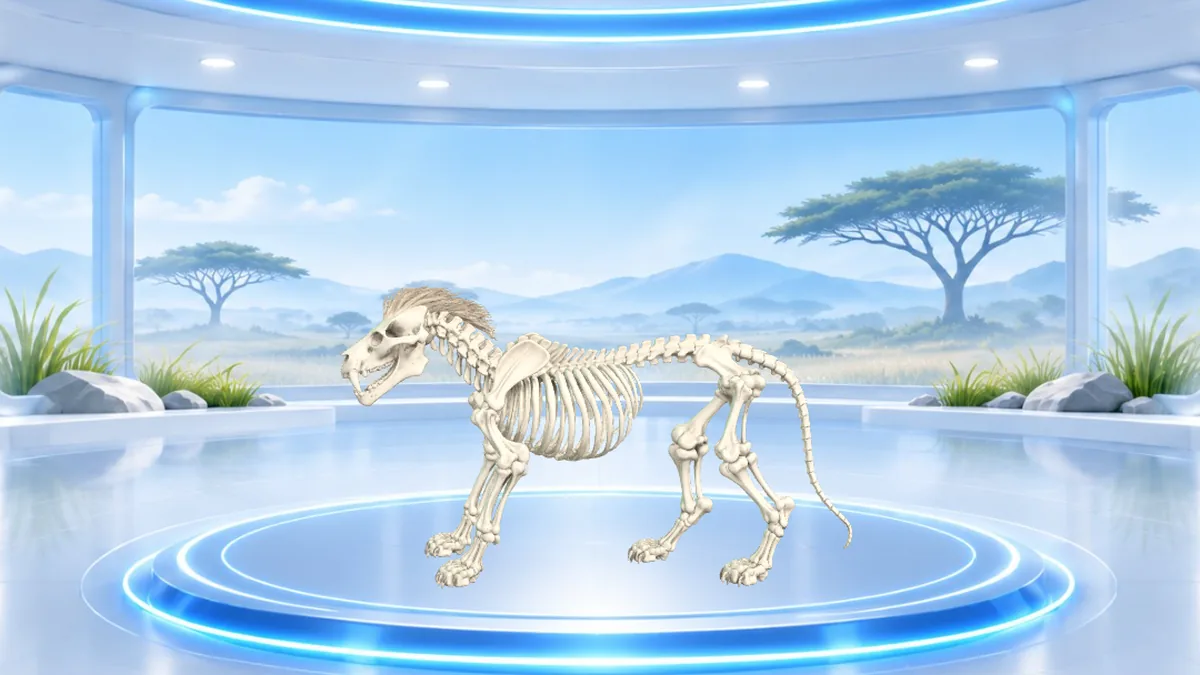 Skeleton
Lion quick facts
| Animal group | Mammal, cat family |
|---|---|
| Roar | Can be heard about 8 km away |
| Claws | Retractable |
| Rest | Up to about 20 hours a day |
| Diet | Meat |
The lion skeleton
A lion's skeleton is a big version of a house cat's, with a powerful jaw, strong front legs for grabbing prey and long canine teeth. Its claws pull back into sheaths when it walks.
Inside the lion
In the Inside view you can tap these labels on the 3D model:
- Brain
- Controls every move, sense and thought.
- Heart
- Pumps blood around the whole body, all day and night.
- Lungs
- Take in oxygen from the air with every breath.
- Intestines
- A short gut, built for a meat diet.
Interesting facts about lions
- A lion's roar comes from a specially shaped voice box and can be heard about 8 km away.
- Lions rest for up to 20 hours a day to save energy for the hunt.
- Like house cats, they can pull their claws back in.
- Their tongues are covered in rough backward-facing spikes.
- As meat eaters, they have a short gut compared with grazing animals.
More animals in 3D
Lion anatomy questions
How far can you hear a lion roar?
A lion's roar can be heard about 8 km away.
How many hours a day do lions sleep?
Lions rest for up to about 20 hours a day.
Are lion claws retractable?
Yes. Like other cats, lions can pull their claws back into sheaths.
Why is a lion's tongue rough?
It is covered in small backward-facing spikes that help scrape meat from bones.
The 3D Animal Anatomy simulator is made by Julian Neagu, a solo founder in London, as part of VisionVix Simulators. It is free to use in the browser on desktop and phone, with no sign-up.