Octopus Anatomy in 3D: Three Hearts, Blue Blood and No Bones
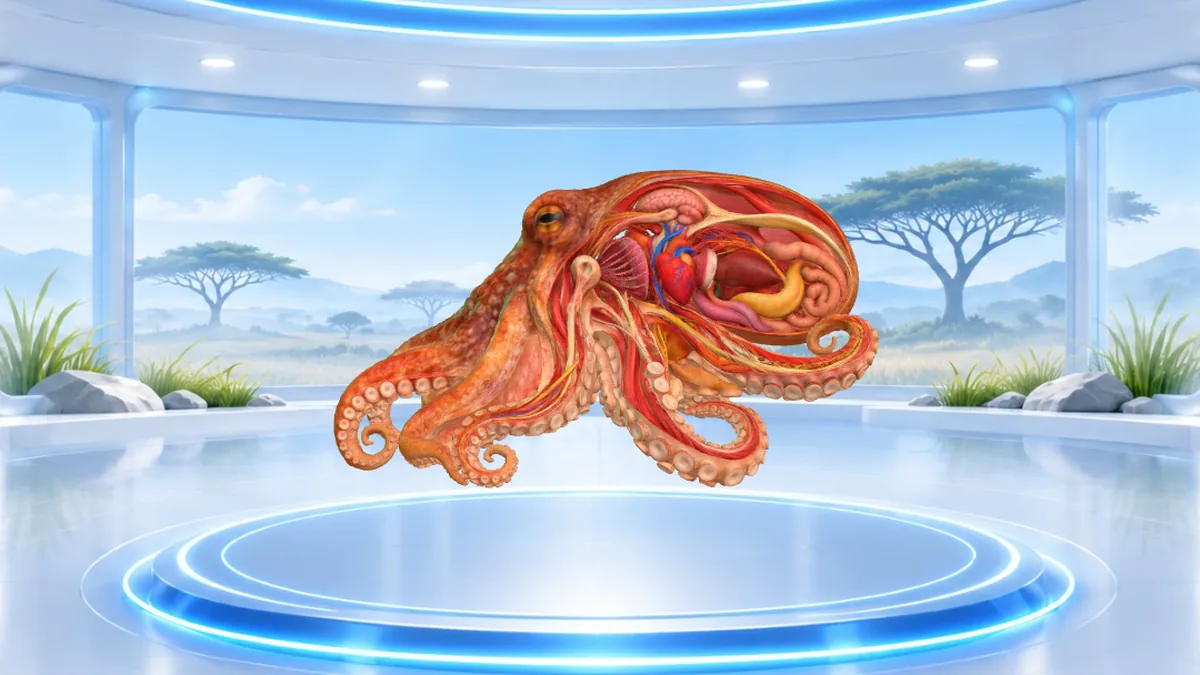
Octopuses are some of the strangest animals on Earth. They have three hearts, blue blood, no bones and arms that can taste. In the 3D Animal Anatomy simulator you can turn an octopus around, look inside at its hearts and gills, and compare it with an artistic bone version.
 Explore in 3D
Three ways to see the octopus
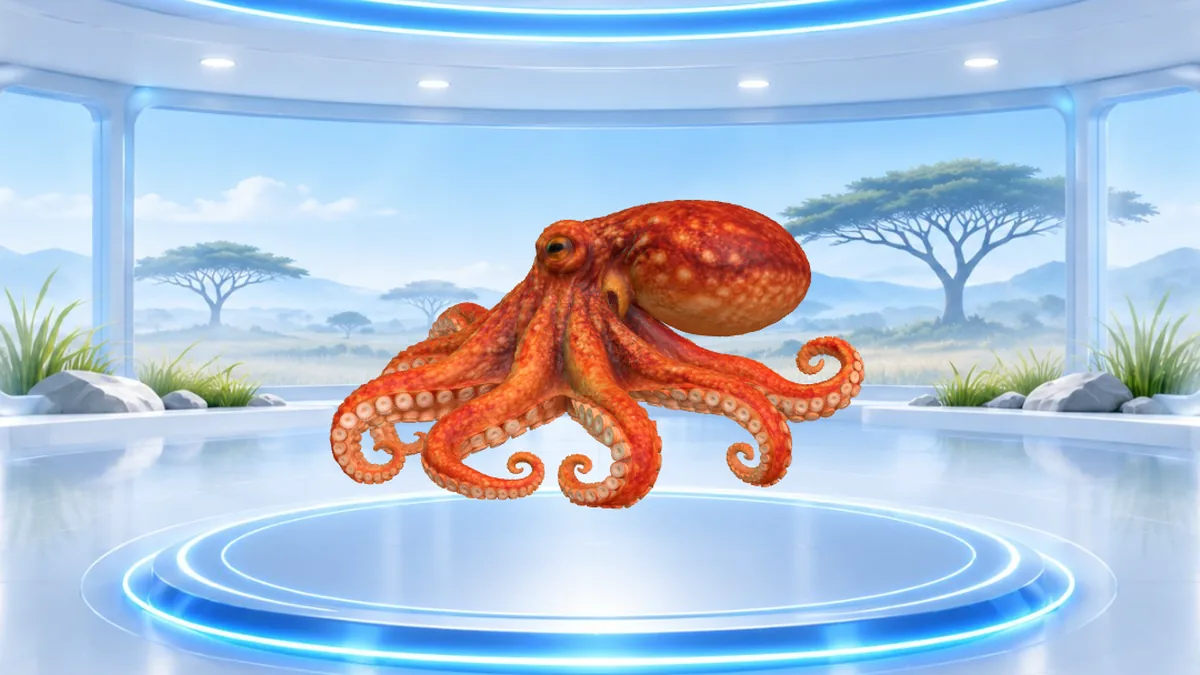 Full body
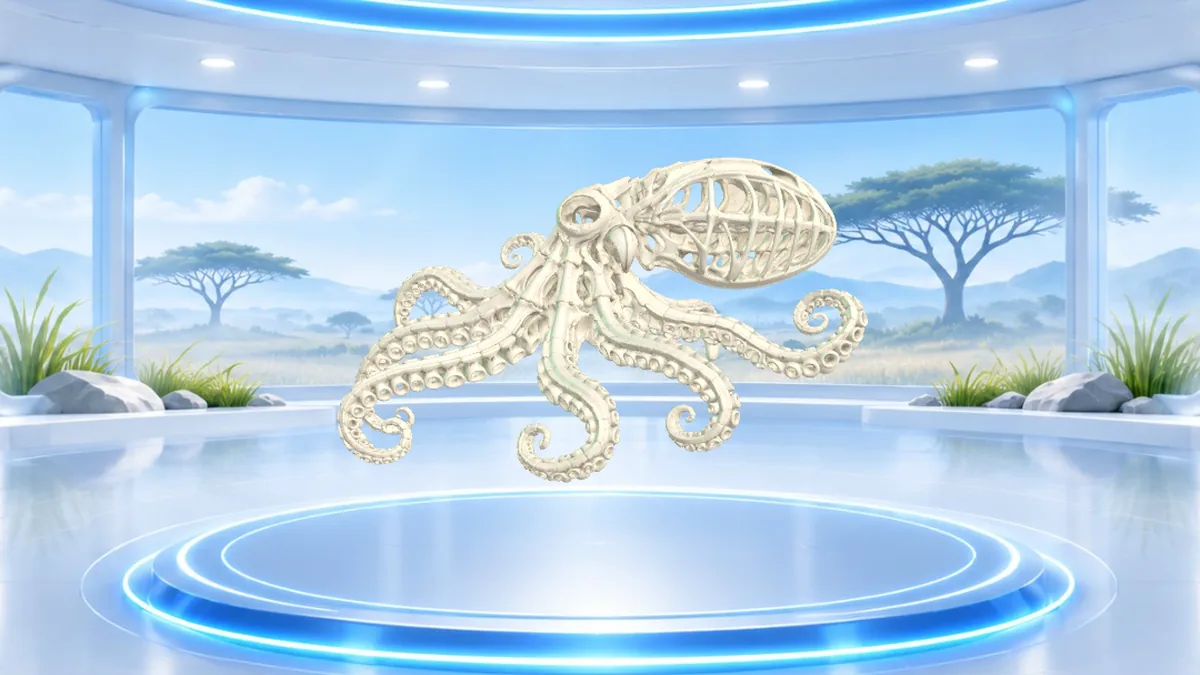 Bone sculpture
Octopus quick facts
| Animal group | Mollusc |
|---|---|
| Hearts | Three |
| Blood | Blue |
| Bones | None, only a hard beak |
| Arms | Eight, packed with nerve cells |
The octopus skeleton
Real octopuses have no skeleton at all. Their only hard part is a parrot-like beak, which is why they can squeeze through tiny gaps. The skeleton view in the simulator is an artist's idea of one, made so you can compare it with animals that do have bones.
Inside the octopus
In the Inside view you can tap these labels on the 3D model:
- Brain
- Wraps around the food tube. Most of its nerve cells are in the arms.
- Heart
- The main heart. Two more hearts pump blood through the gills.
- Gill
- Takes oxygen from the water.
- Eye
- Large eyes that see well in dim water.
- Digestive system
- Breaks food down after the sharp beak bites it.
Interesting facts about octopuses
- An octopus has three hearts: one for the body and two for the gills.
- Its blood is blue because it carries oxygen with copper, not iron.
- About two thirds of its nerve cells are in its eight arms.
- It has no bones, only a hard beak, so it can squeeze through tiny gaps.
- Octopuses can change colour and texture in a split second to hide.
More animals in 3D
Octopus anatomy questions
How many hearts does an octopus have?
Three. One pumps blood around the body and two pump it through the gills.
Why is octopus blood blue?
It uses a copper-based molecule called haemocyanin to carry oxygen, which turns blue.
Does an octopus have bones?
No. An octopus has no skeleton at all. Its only hard part is its beak.
Can octopus arms think for themselves?
In a way. About two thirds of an octopus's nerve cells are in its arms, so each arm can sense and move on its own.
The 3D Animal Anatomy simulator is made by Julian Neagu, a solo founder in London, as part of VisionVix Simulators. It is free to use in the browser on desktop and phone, with no sign-up.