Shark Anatomy in 3D: Cartilage Skeleton, Liver and Teeth
Sharks are fish with a skeleton made of cartilage instead of bone, and rows of teeth that keep replacing themselves. In the 3D Animal Anatomy simulator you can turn a shark around, look inside at its big liver and see its skeleton.
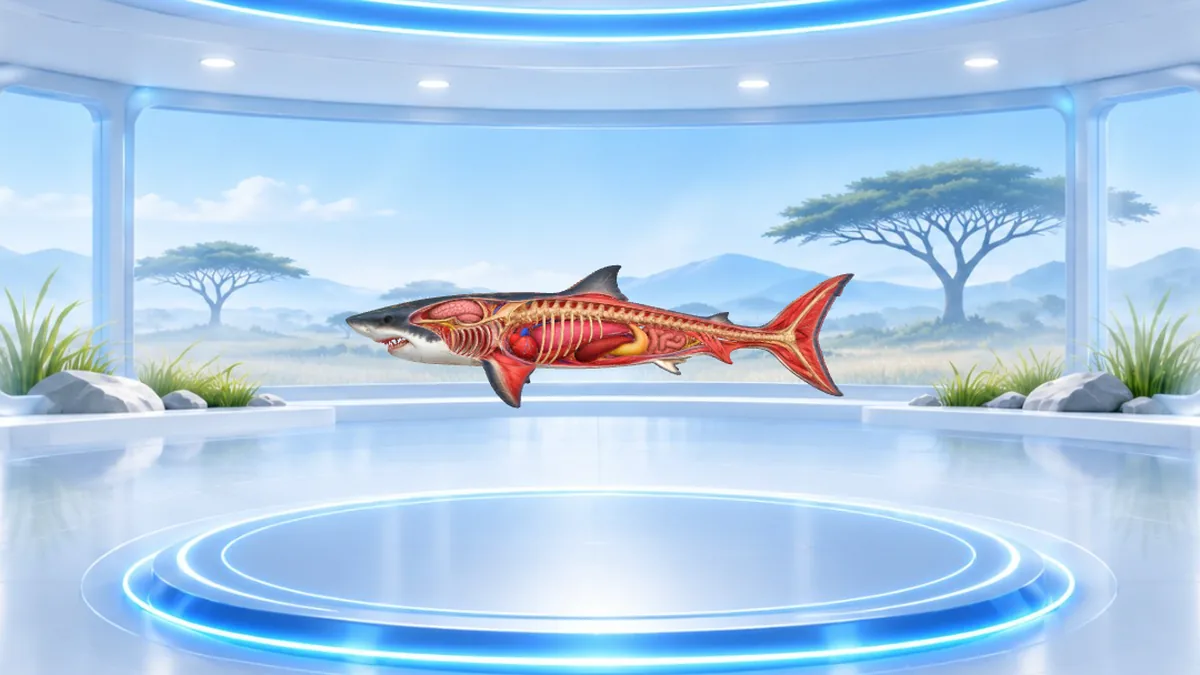 Explore in 3D
Three ways to see the shark
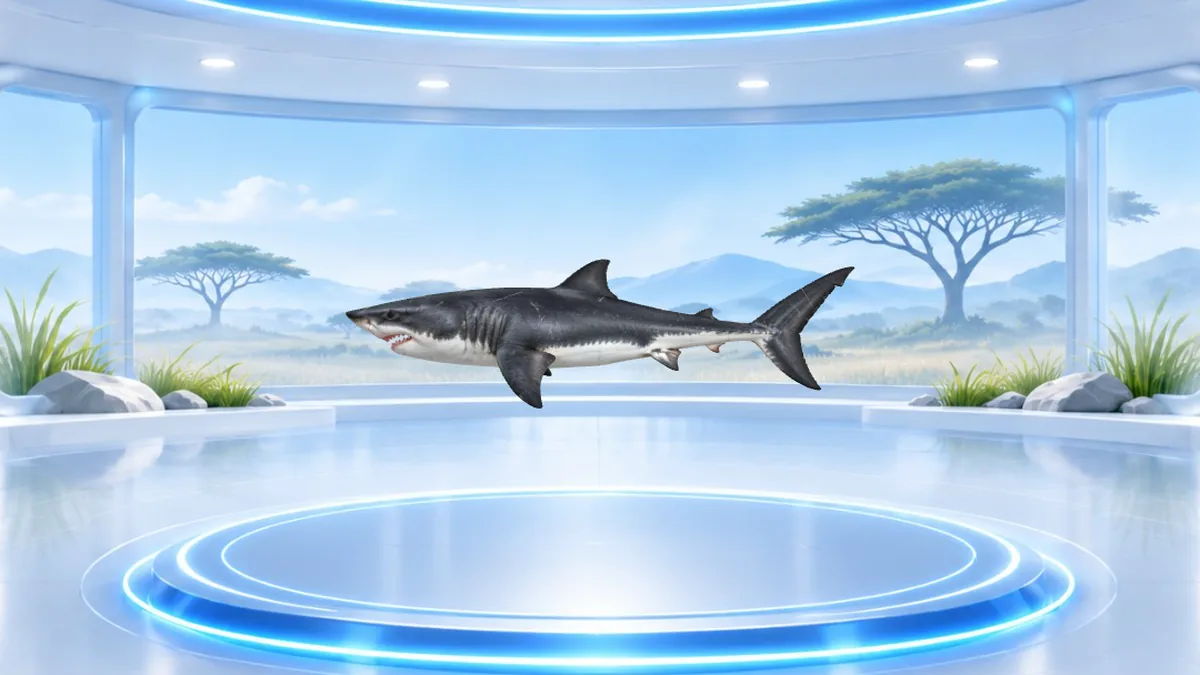 Full body
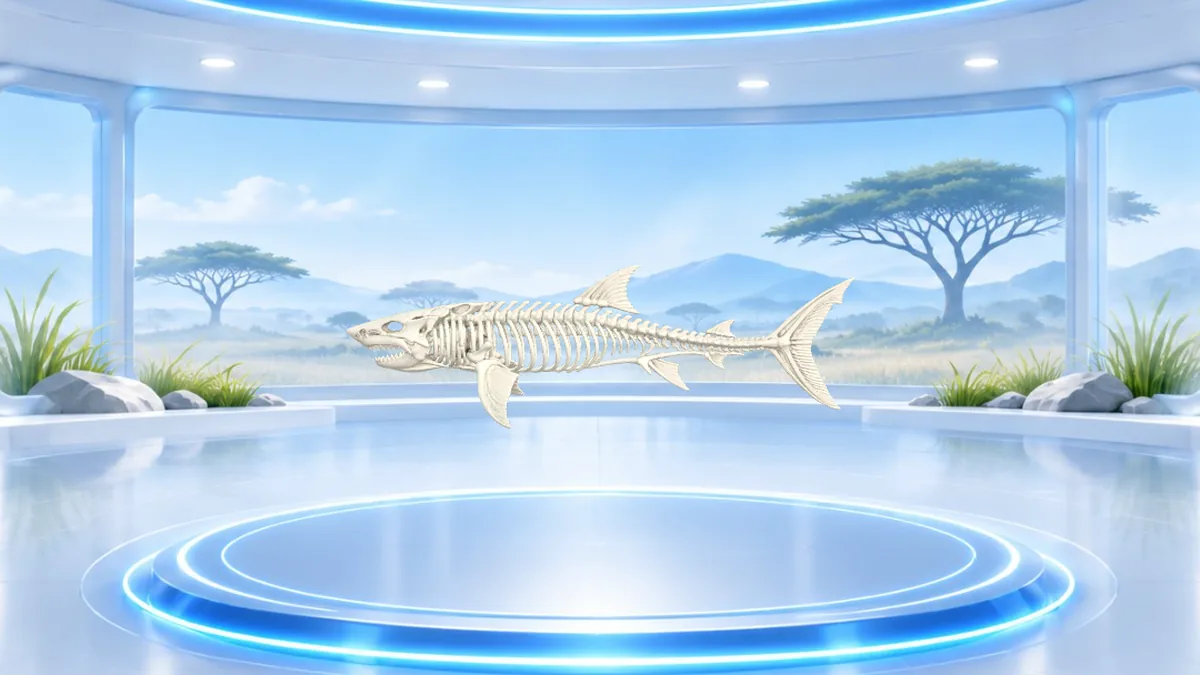 Skeleton
Shark quick facts
| Animal group | Fish (cartilaginous) |
|---|---|
| Skeleton | Cartilage, not bone |
| Swim bladder | None |
| Liver | Up to about a quarter of its weight |
| Teeth | Replaced throughout life |
The shark skeleton
A shark's skeleton is made of cartilage, the same flexible material as the tip of your nose. It is lighter than bone, which helps the shark stay afloat and turn quickly.
Inside the shark
In the Inside view you can tap these labels on the 3D model:
- Brain
- Senses smell, movement and even tiny electric signals in the water.
- Heart
- Pumps blood around the whole body, all day and night.
- Liver
- Huge and oily, it helps the shark stay afloat.
- Intestines
- A spiral inside slows food down so more of it is absorbed.
Interesting facts about sharks
- A shark's skeleton is made of cartilage, not bone.
- It has no swim bladder, so a huge oily liver helps it stay afloat.
- Sharks grow new teeth all their lives, replacing ones they lose.
- Tiny pores on the snout sense the electric signals of other animals.
- Many sharks must keep swimming to push water over their gills.
More animals in 3D
Shark anatomy questions
Do sharks have bones?
No. A shark's skeleton is made of cartilage, which is lighter and more flexible than bone.
How do sharks float without a swim bladder?
Their big oily liver, up to about a quarter of their weight, gives them lift.
Do sharks lose their teeth?
Yes, often. New teeth keep moving forward from rows behind to replace them throughout life.
Can sharks sense electricity?
Yes. Special pores on the snout pick up the tiny electric signals made by other animals.
The 3D Animal Anatomy simulator is made by Julian Neagu, a solo founder in London, as part of VisionVix Simulators. It is free to use in the browser on desktop and phone, with no sign-up.