Shark vs Octopus: Cartilage Skeleton vs No Skeleton at All
A shark is a fish with a skeleton made of cartilage, the bendy material in your ears and nose. An octopus has no skeleton at all: its only hard part is a parrot-like beak. That is why an octopus can squeeze through any gap bigger than its beak.
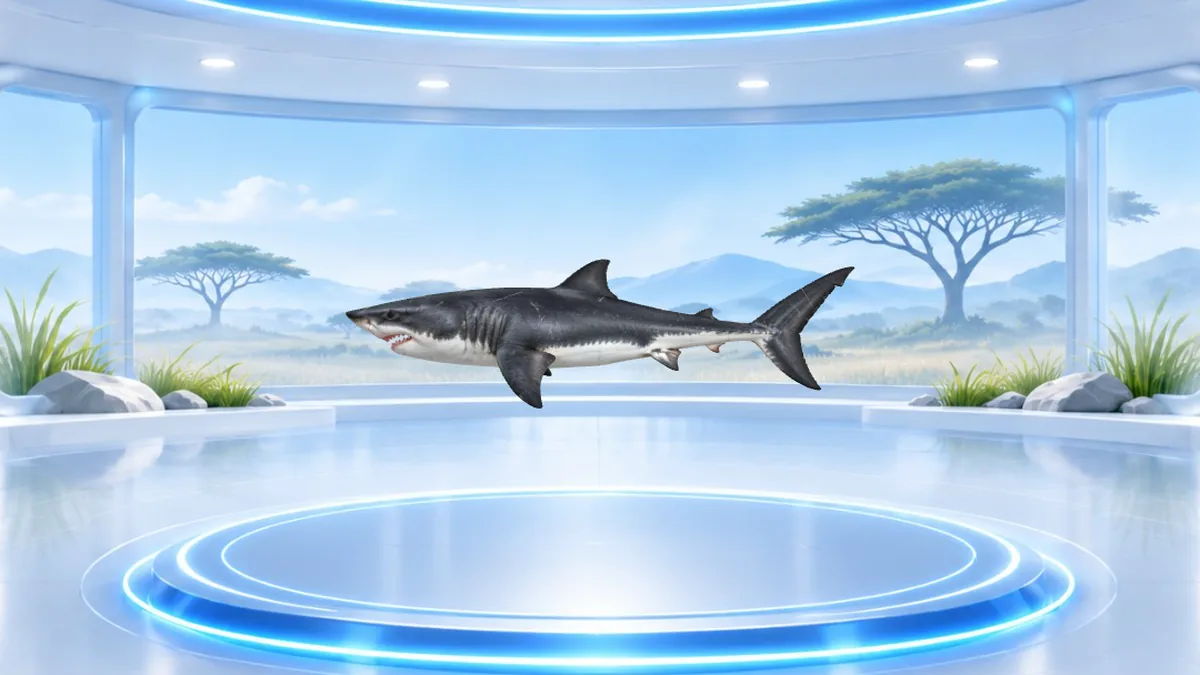
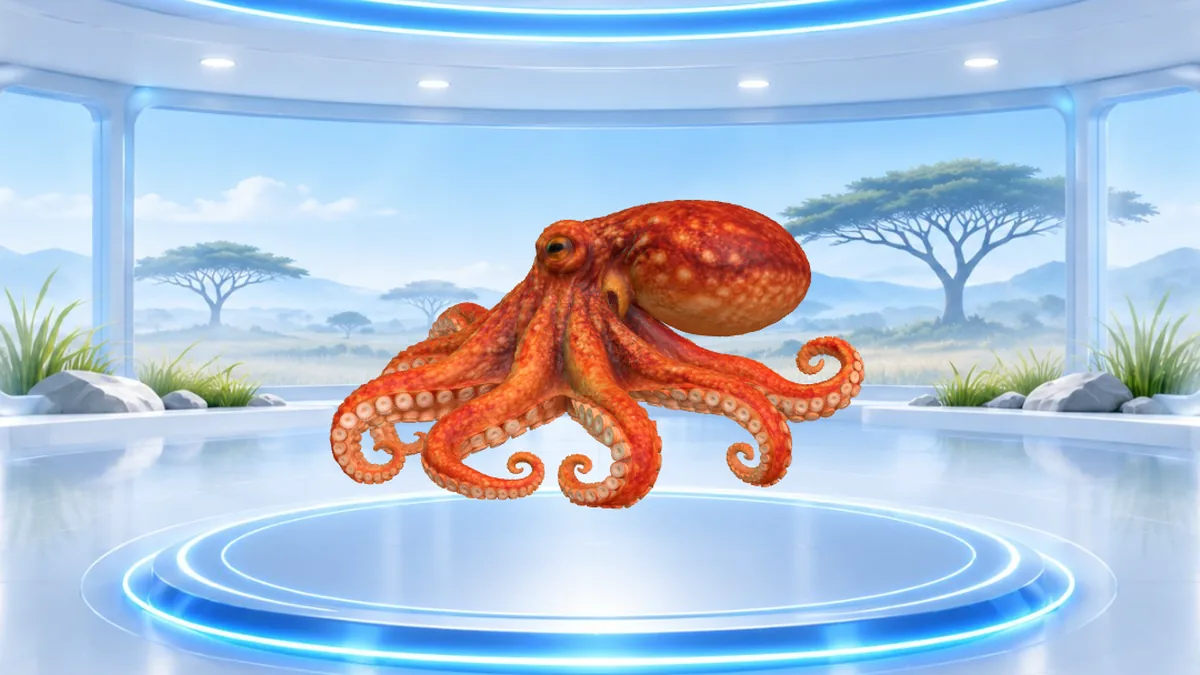
Shark vs octopus: true size
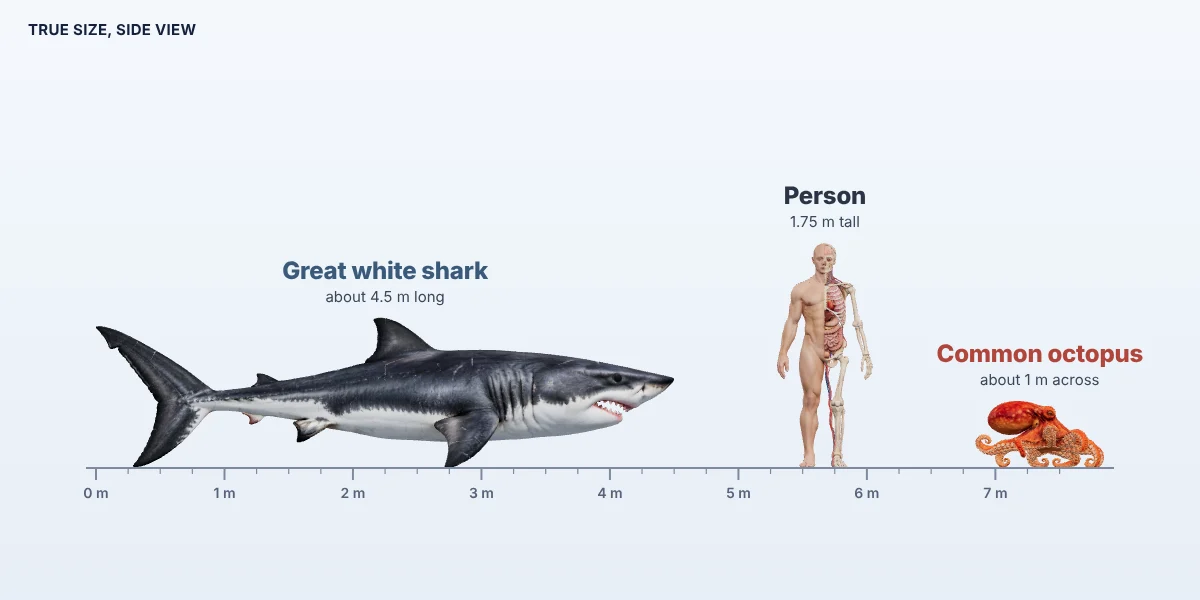
Shark vs octopus at a glance
| Shark | Octopus | |
|---|---|---|
| Size | A great white is about 4.5 m long on average | A common octopus is about 1 m across with arms spread |
| Group | Fish (cartilaginous fish) | Mollusc, related to snails and squid |
| Skeleton | Cartilage, no true bone | None, only a hard beak |
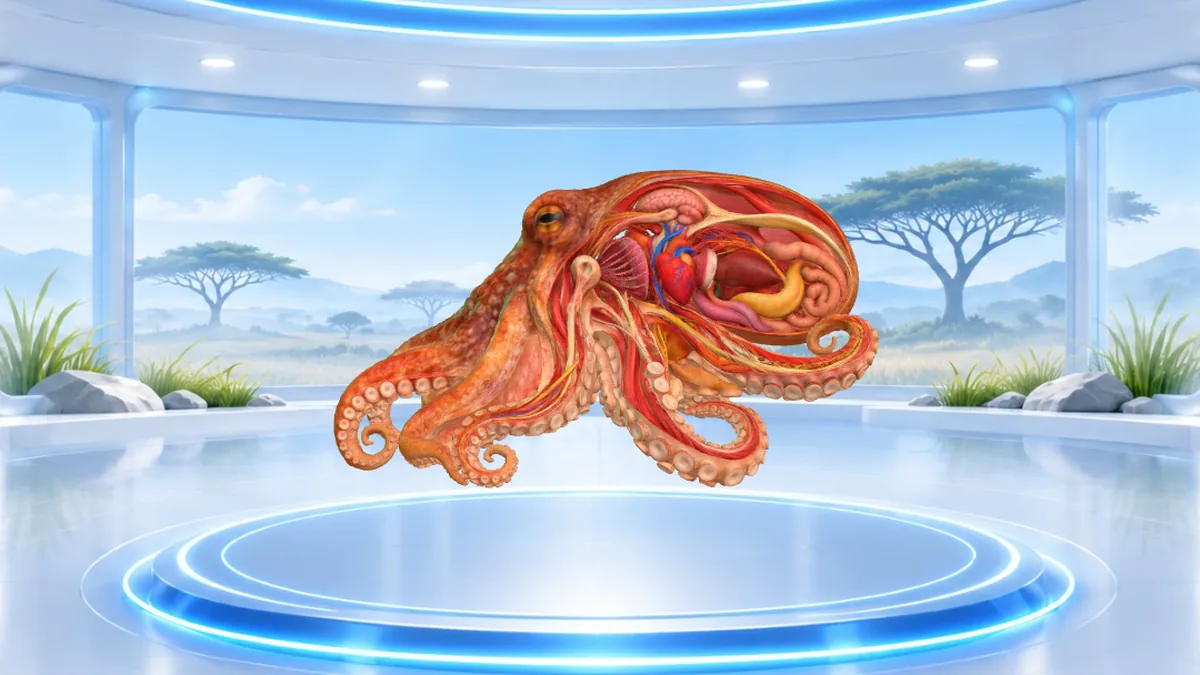
| Hearts | One | Three |
| Blood | Red | Blue, using copper to carry oxygen |
| Brain | One brain | A central brain, with most nerve cells in the arms |
| Special sense | Detects tiny electric fields from prey | Suckers that can taste and touch |
| Lifespan | A great white can live around 70 years | A common octopus lives about 1 to 2 years |
Two very different bodies
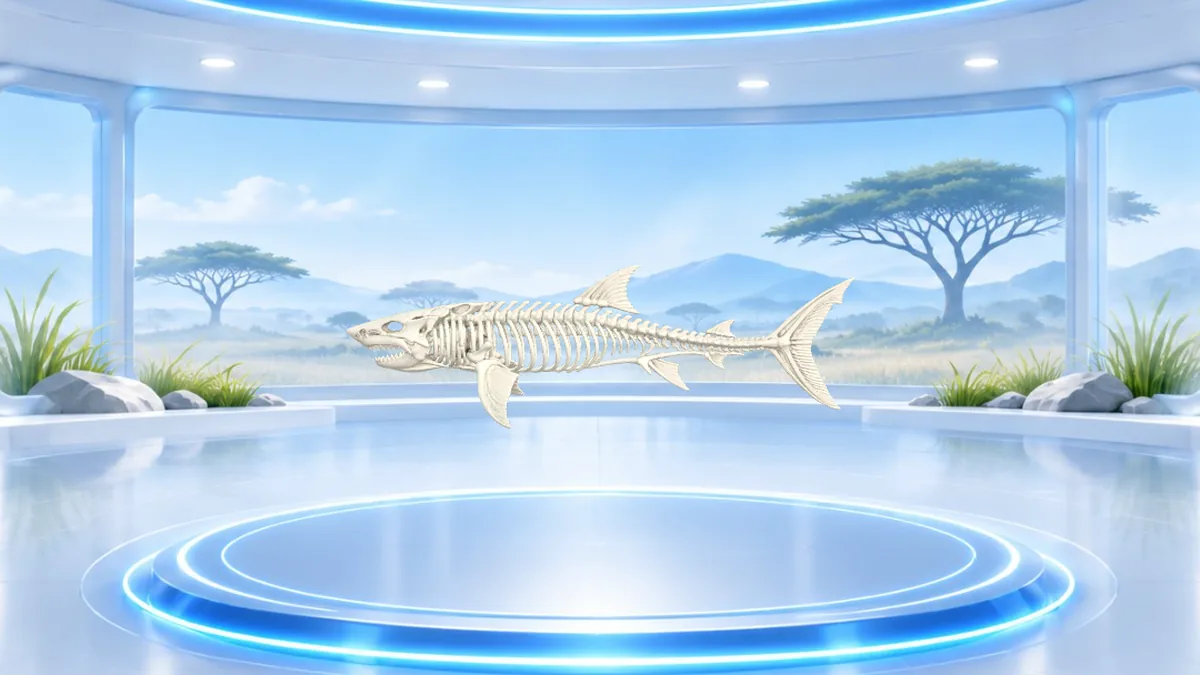
A shark has a backbone and a skeleton, just made of cartilage instead of bone. Cartilage is lighter than bone, which helps the shark stay afloat. An octopus is an invertebrate. Its body is soft muscle, held in shape by water pressure and its own muscles, so it can change shape completely.
Hunting styles
Sharks hunt with a powerful sense of smell, and special jelly-filled pores on the snout pick up the electric signals of a beating heart. Octopuses hunt with their eyes and their suckers, change colour and texture in a split second to hide, and squirt ink to escape.
Quick facts
- Sharks grow new teeth all their lives and can lose thousands.
- Octopuses can open jars and solve puzzles in experiments.
- Sharks were swimming in the oceans before trees grew on land.
- An octopus has no bones, so it can fit through a hole the size of its beak.
- Octopuses can taste with the suckers on their arms.
Look inside both
Shark vs octopus questions
Does a shark have bones?
No. A shark’s skeleton is made of cartilage, the same bendy material as your ears.
Does an octopus have a skeleton?
No. Its only hard part is a beak, which is why it can squeeze through tiny gaps.
How many hearts does an octopus have?
Three: two pump blood through the gills and one pumps it around the body.
Who would win, a shark or an octopus?
It depends on the size. Big sharks eat octopuses, but large octopuses have been filmed catching small sharks.
Why is octopus blood blue?
It carries oxygen with a copper-based protein called haemocyanin, which turns blue when it holds oxygen.
More face-offs: see all 3D comparisons.
The 3D Animal Anatomy simulator is made by Julian Neagu, a solo founder in London, as part of VisionVix Simulators. It is free to use in the browser on desktop and phone, with no sign-up.