Monarch Butterfly Anatomy in 3D: Wings, Organs and Exoskeleton
The monarch butterfly is famous for its bright orange wings and its huge journey across North America. In the 3D Bug Anatomy simulator you can turn it around, look inside at its organs and see its exoskeleton.
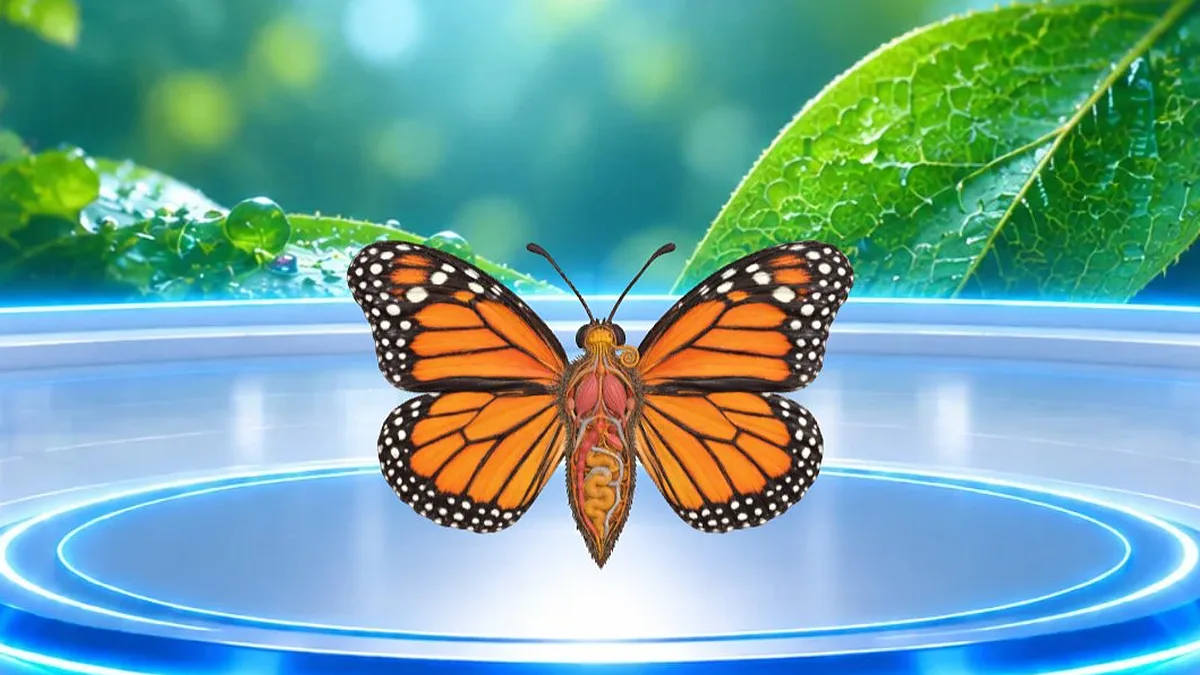 Explore in 3D
Three ways to see the monarch butterfly
 Whole bug
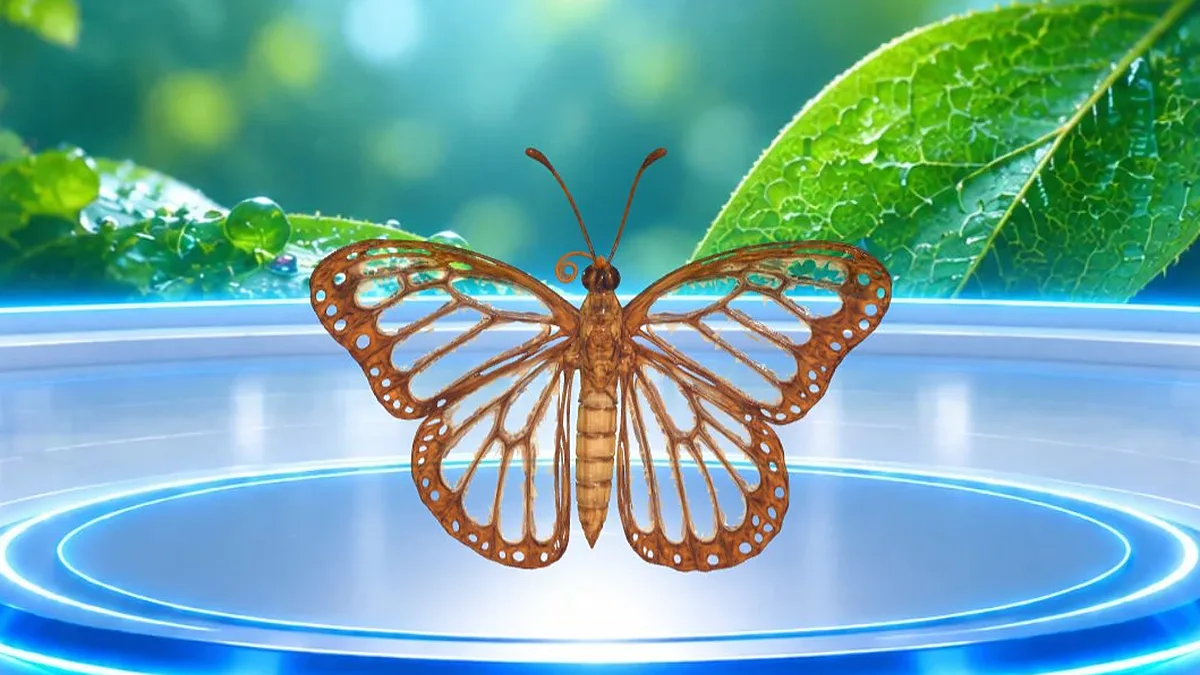 Exoskeleton
Monarch Butterfly quick facts
| Animal group | Insect |
|---|---|
| Wingspan | About 9 to 10 cm |
| Legs and wings | 6 legs and 4 wings |
| Diet | Nectar as an adult, milkweed as a caterpillar |
| Migration | Thousands of kilometres to Mexico and California |
The monarch butterfly exoskeleton
The monarch's exoskeleton holds a slim body in three parts, with four large wings joined to the thorax. The wings are thin sheets held open by stiff veins, covered in thousands of tiny overlapping scales.
Inside the monarch butterfly
In the Inside view you can tap these labels on the 3D model:
- Proboscis
- A long drinking straw that stays coiled up like a spring under the head and unrolls to sip nectar.
- Flight muscles
- Packed into the middle section, these muscles move the big wings up and down.
- Gut
- A butterfly only drinks, so its gut handles liquids like nectar and juice from ripe fruit.
Interesting facts about the monarch butterfly
- Its wings are covered in tiny overlapping scales, like the tiles on a roof.
- A butterfly tastes with sensors on its feet.
- It drinks through a long tube called a proboscis that stays coiled up like a spring.
- Monarch caterpillars eat milkweed, which makes them taste bad to birds.
- Each autumn, millions of monarchs fly thousands of kilometres to spend the winter in Mexico and California.
More bugs in 3D
Monarch Butterfly anatomy questions
How far do monarch butterflies migrate?
Monarchs from eastern North America can fly thousands of kilometres to reach their winter forests in Mexico.
How does a butterfly drink?
It uncoils a long straw-like mouthpart called a proboscis and sips nectar from flowers.
Why are monarchs orange?
The bright colours warn birds that monarchs taste bad, thanks to the milkweed they ate as caterpillars.
What are butterfly wings made of?
Thin layers of chitin held open by veins and covered in tiny coloured scales.
The 3D Bug Anatomy simulator is made by Julian Neagu, a solo founder in London, as part of VisionVix Simulators. It is free to use in the browser on desktop and phone, with no sign-up.