Grasshopper Anatomy in 3D: Jumping Legs, Organs and Exoskeleton
The grasshopper is the champion jumper of the insect world, with huge back legs that work like a catapult. In the 3D Bug Anatomy simulator you can turn it around, look inside and see its exoskeleton.
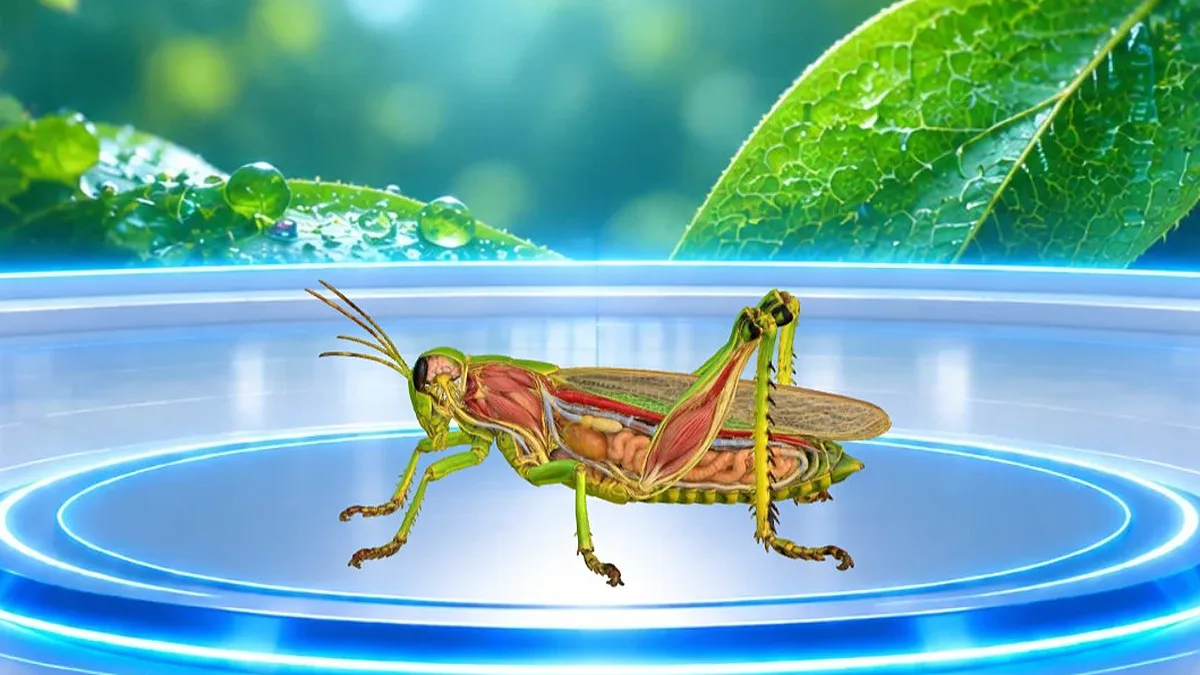 Explore in 3D
Three ways to see the grasshopper
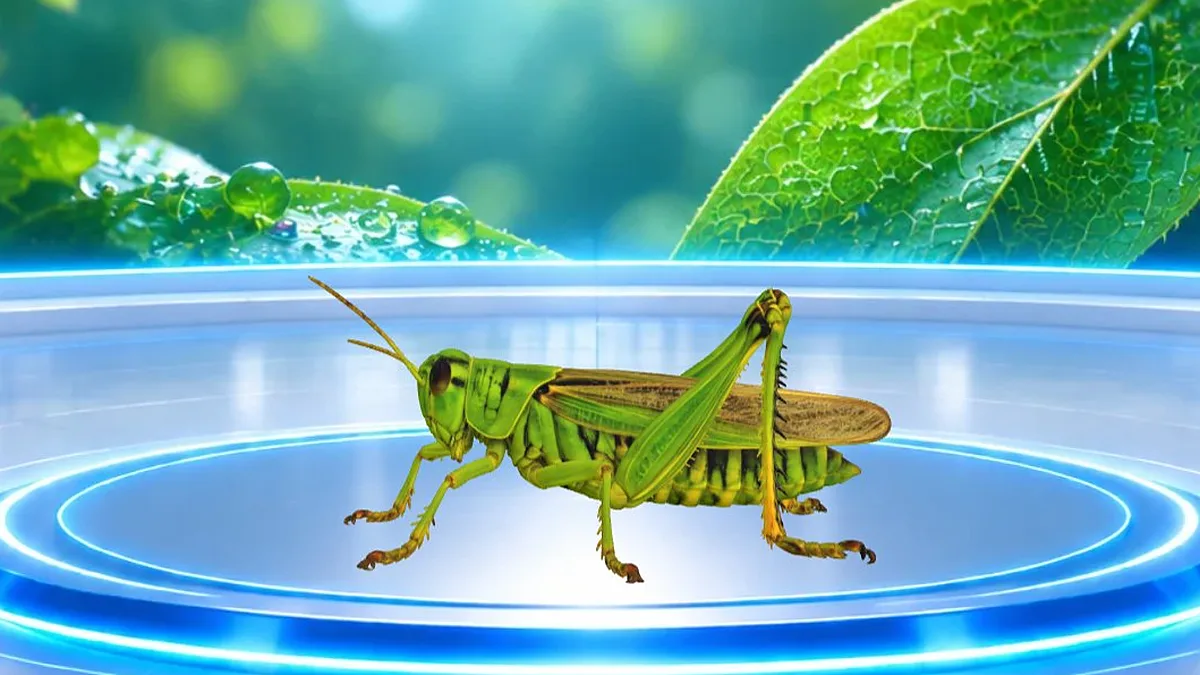 Whole bug
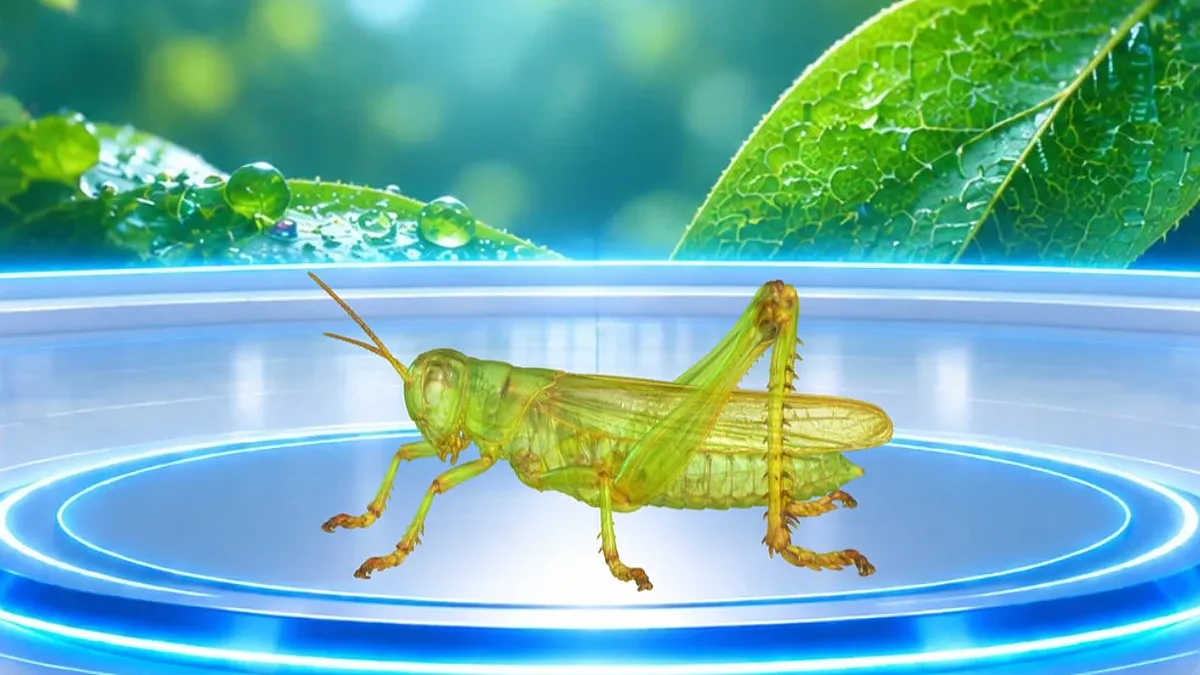 Exoskeleton
Grasshopper quick facts
| Animal group | Insect |
|---|---|
| Legs and wings | 6 legs and 4 wings |
| Jump | Up to about 20 times its own body length |
| Diet | Grasses and leaves |
| Ears | On the sides of its belly |
The grasshopper exoskeleton
A grasshopper's exoskeleton is long and narrow, with a big head, a saddle-shaped shield behind it and two huge back legs. Those back legs hold the big jumping muscles that launch it into the air.
Inside the grasshopper
In the Inside view you can tap these labels on the 3D model:
- Brain
- Takes in signals from the big eyes and long antennae and decides when to jump.
- Gut
- Grinds up and digests the grass and leaves it munches all day long.
- Jumping muscle
- The huge muscle in each back leg loads up like a bent spring, then lets go to fling the grasshopper into the air.
Interesting facts about the grasshopper
- Its big back legs work like a catapult, flinging it up to about 20 times its own body length.
- It hears with ears on the sides of its belly.
- Many grasshoppers sing by rubbing a back leg against a wing.
- It breathes through tiny holes along its body, like other insects.
- Locusts are a kind of grasshopper that can gather in enormous swarms.
Compare: Grasshopper vs Locust: What Is the Difference?
More bugs in 3D
Grasshopper anatomy questions
How far can a grasshopper jump?
Up to about 20 times its own body length, thanks to its powerful back legs.
Where are a grasshopper's ears?
On the sides of its abdomen, just behind the back legs.
How do grasshoppers make sound?
Many rub their back legs against their wings to make a chirping song.
What is the difference between a grasshopper and a locust?
Locusts are types of grasshopper that can change their behaviour and gather in huge swarms.
The 3D Bug Anatomy simulator is made by Julian Neagu, a solo founder in London, as part of VisionVix Simulators. It is free to use in the browser on desktop and phone, with no sign-up.