Alexander the Great's Empire Map in 3D: From Greece to India
Alexander the Great became king of Macedonia at 20 and spent the rest of his short life on the march. In about 11 years he built an empire from Greece and Egypt to the edge of India. On the 3D History Globe you can follow his route battle by battle.
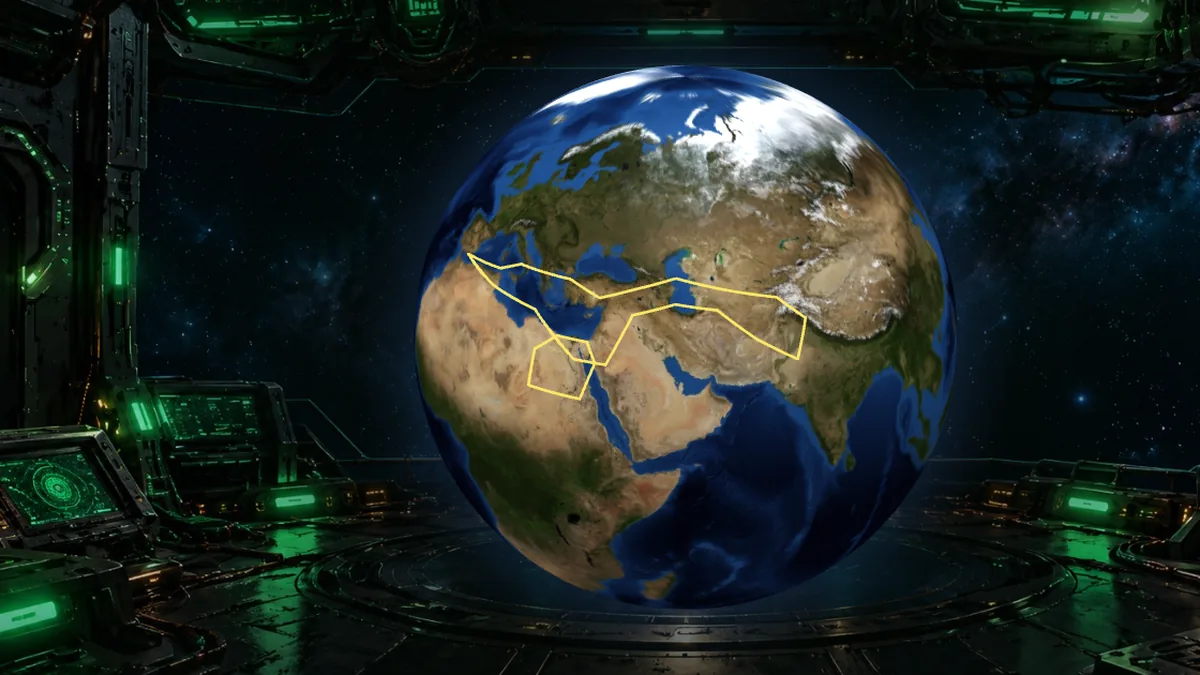 Explore in 3D
Empire of Alexander the Great quick facts
| Dates | 336 to 323 BC |
|---|---|
| Ruler | Alexander III of Macedon |
| Later capital | Babylon |
| Largest area | About 5 million km² |
| Age at death | 32 |
Interesting facts
- Alexander is famous for never losing a major battle.
- He founded many cities, at least a dozen called Alexandria, the most famous in Egypt.
- He conquered the vast Persian Empire in only a few years.
- He was taught as a boy by the philosopher Aristotle.
- After he died at 32, his generals split the empire between them.
Empire of Alexander the Great timeline
- 336 BCAlexander becomes king of Macedonia
- 334 BCHe crosses into Asia Minor
- 332 BCEgypt welcomes him and he founds Alexandria
- 331 BCHe defeats the Persian king at Gaugamela
- 326 BCHis army reaches India and refuses to go further
- 323 BCAlexander dies in Babylon
On the History Globe, press play to watch these stages appear one by one, with the borders growing across the map.
More empires in 3D
Empire of Alexander the Great questions
How old was Alexander the Great when he died?
He died at 32, in Babylon in 323 BC.
How far did Alexander the Great's empire reach?
From Greece and Egypt in the west to the Indus valley in present-day Pakistan in the east.
Who taught Alexander the Great?
The philosopher Aristotle was his teacher when he was a teenager.
What happened to his empire after he died?
His generals divided it, and it broke into several kingdoms, including the Ptolemies in Egypt and the Seleucids in Asia.
Why are so many cities called Alexandria?
Alexander founded many cities and named a number of them after himself. Alexandria in Egypt is the best known.
The 3D History Globe is made by Julian Neagu, a solo founder in London, as part of VisionVix Simulators. It is free to use in the browser on desktop and phone, with no sign-up. Map borders are approximate, for learning.