Mercury in 3D: Facts About the Closest Planet to the Sun
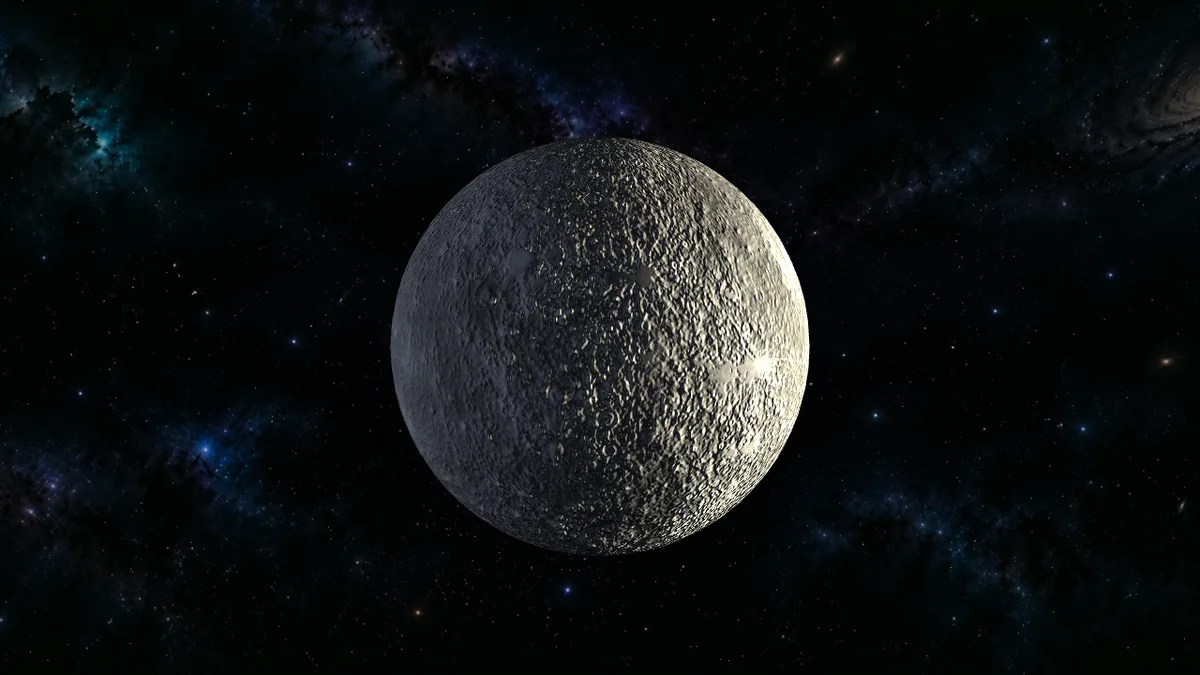
Mercury is the smallest planet and the closest one to the Sun. It races around the Sun faster than any other planet, yet turns very slowly on its axis. In the 3D Solar System you can fly to Mercury and spin its grey, cratered surface.
 Explore in 3D
Mercury quick facts
| Type | Rocky planet |
|---|---|
| Diameter | 4,879 km |
| Distance from the Sun | About 57.9 million km |
| Year | 88 Earth days |
| Day (sunrise to sunrise) | About 176 Earth days |
| Gravity | 3.7 m/s², about 38% of Earth's |
| Moons | None |
| Position | 1st planet from the Sun |
Interesting facts about Mercury
- A year on Mercury is only 88 Earth days, the shortest of any planet.
- One day, from sunrise to sunrise, lasts about 176 Earth days, longer than its year.
- It has almost no air to hold heat, so days reach about 430 °C and nights drop to about minus 180 °C.
- Its surface is covered in craters, a bit like our Moon.
- It is only slightly larger than Earth's Moon.
What you can do in 3D
Fly to Mercury from the planet bar, turn it with your finger or mouse to see its cratered surface, then switch on the orbits to see how tight its path is around the Sun.
From the Sun outwards
1st planet from the Sun. Tap any body to open its page.
Mercury questions
How big is Mercury?
Mercury is 4,879 km across, the smallest of the eight planets and only slightly bigger than Earth's Moon.
How long is a year on Mercury?
Mercury goes around the Sun in 88 Earth days, the shortest year of any planet.
How hot is Mercury?
Days reach about 430 °C, but with almost no atmosphere the heat escapes at night, when it falls to about minus 180 °C.
Does Mercury have moons?
No. Mercury has no moons, and neither does Venus.
Why is a day on Mercury so long?
Mercury spins very slowly while it moves quickly around the Sun. Together that makes one sunrise to the next take about 176 Earth days.
The 3D Solar System is made by Julian Neagu, a solo founder in London, as part of VisionVix Simulators. It is free to use in the browser on desktop and phone, with no sign-up. Facts are based on NASA data.